
Read and written by John-Miguel Mitchell
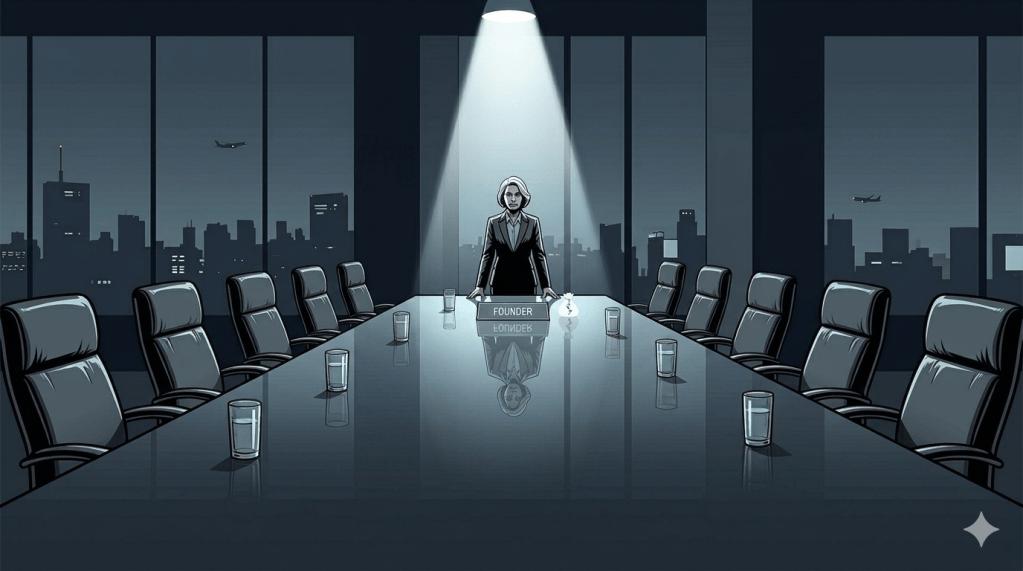
“It is curious that physical courage should be so common in the world, and moral courage so rare.” — Mark Twain, Mark Twain in Eruption (1940), edited by Bernard DeVoto
The companies that stand for nothing except growth will eventually stand for nothing at all.
Most startup founders can recite their company values on command. Almost none have tested whether those values survive contact with real money, real pressure, or a real moment of consequence. Until Anthropic walked away from a $200 million government contract rather than compromise two core principles, “company values” remained one of the most overused and underdelivered phrases in startup culture. That moment changed the conversation — but only if founders are paying attention.
Defining company values is table stakes. The companies that actually build lasting cultures are the ones who design their values into operational systems and defend them when it’s expensive to do so.
Everything else is branding.
The Anthropic Moment — And Why It Matters
In February 2026, the U.S. Department of Defense demanded unrestricted access to Claude, Anthropic’s AI model — including mass domestic surveillance and fully autonomous weapons. Anthropic refused. The Pentagon cancelled a $200 million contract, labeled the company a national security risk, and the President called them “radical left” on social media.
Anthropic held the line anyway.
Within days, Claude hit number one on the Apple App Store, overtaking ChatGPT. Daily signups broke records, free users jumped 60%, and paid subscribers doubled — all after a federal ban. TechCrunch reported a wave of users switching from ChatGPT to Claude, citing the values dispute as the tipping point. Dario Amodei put it plainly: “The red lines we drew, we drew because we believe crossing them is contrary to American values.”
That clarity wasn’t improvised under pressure. It was built before the pressure arrived — embedded in contracts, product architecture, and decision-making long before anyone was threatening to pull the deal. That’s the part most founders miss.
Why Most Company Values Fail
Anthropic’s moment stands out precisely because it’s so rare. The more common story looks like this: values get written at an offsite, framed on a wall, mentioned in onboarding, and quietly abandoned by Q3. The entire startup ecosystem is in desperate needs of leaders with a backbone.
The tell is simple — if your values have never cost you anything, they aren’t values. They’re marketing copy.
Google had “don’t be evil.” Meta was going to “connect the world.” OpenAI was founded as a nonprofit to benefit all of humanity — then signed its own Pentagon deal to fill the void Anthropic left. Values drift doesn’t announce itself. It shows up dressed in language about growth, pragmatism, and evolving stakeholder needs.
For founders building right now, the question isn’t whether your values sound good. It’s whether your systems, your hiring decisions, and your business boundaries actually reflect them — and what happens when they’re tested.
The Pushback — And Why It Doesn’t Hold
That framing invites some pushback. Here are the two most common objections, and why neither lands.
| Objection | Rebuttal |
|---|---|
| “Not every company can afford $200M walkaway moments.” | Scale is irrelevant. The discipline of pre-deciding your red lines is the same whether you’re turning down a $200M contract or a $20K client. Dollar amounts differ. The framework doesn’t. |
| “It’s easy to have values when holding them goes viral.” | Anthropic made the call before the App Store rankings, before the record signups, before the user migration. Principled decisions don’t come with guaranteed upside. That’s what makes them principled. |
Three Solutions: Building Values That Actually Hold
Knowing what not to do is only useful if it points somewhere. Here’s where to start.
| Action | Why It Matters | |
|---|---|---|
| Quick Win | Write your Refusal List this week. Not “we value integrity” — but “we won’t misrepresent our product to close a deal.” Specific. No asterisks. | You can’t defend a line you haven’t drawn. |
| Short-Term | Audit values against systems in the next 90 days. Where does each value literally appear in hiring, performance, or vetting? “The onboarding deck” is not an answer. | Unembedded values are culture debt. The bill always arrives at the worst time. |
| Long-Term | Run quarterly stress-tests: What do we do when a major client asks us to cross a line? Rehearse it before you need it. | Anthropic didn’t invent their position under Pentagon pressure. They arrived already knowing the answer. |
The Verdict on Anthropic — And the One Worth Watching

So what does it mean that Anthropic held? One moment of principle doesn’t make a values company — it makes a promising data point. And the real pressure is already arriving in ways most headlines missed.
Semafor reported this week that while Amodei was publicly holding the line, Anthropic’s own investors went quiet. Amazon — which has poured billions into the company — had CEO Andy Jassy meet with Defense Secretary Hegseth and decline to take Anthropic’s side. Other major backers stayed silent; one told Semafor they didn’t want to inflame things with the administration. Another said Anthropic itself asked them to say nothing.
The founder held. The money didn’t.
That’s not a knock on Anthropic — it’s a preview of what every values-driven founder eventually faces. The bigger you get, the more stakeholders you accumulate, and not all of them signed up to defend your principles when it gets expensive. The institutional pull toward a “reasonable resolution” compounds quietly, from every direction, and it rarely announces itself as a values test.
Google, Microsoft, and OpenAI all had their version of this story. Somewhere between founding vision and institutional gravity, the red lines got quietly redrawn.
Maybe Anthropic is different. I genuinely hope so. But build your culture as if you can’t count on that being true for your own company. Define your values before you need them. Design them into everything you build. Defend them when it costs you something real — and make the culture sturdy enough to hold even when the people backing you won’t.
Because it’s easy to have principles when keeping them goes viral. The harder question — about Anthropic, and about yourself — is whether they hold when the room goes quiet.
Questions for Founders
If the answer comes easily, you’re not taking it seriously enough.
1. Your values are on your website. Your cap table is not. Which one actually governs how your company behaves when revenue is at stake — and when did you last check if those two things are aligned?
2. Anthropic wrote its red lines into contracts before anyone was testing them. You wrote yours into a Notion doc after a team offsite. What’s the operational difference between those two things — and which one describes your company?
3. Andy Jassy sat across from the Secretary of Defense and said nothing to defend a company Amazon has billions in. Your investors will face a version of that moment too — just smaller, quieter, and dressed up as a “strategic conversation.” What exactly have you built that would make staying silent feel like the wrong choice?

Article was read & written by John-Miguel Mitchell who is the Founder and Lead Consultant at Ekipo LLC. If you’d like to learn more about how to design and build out the ideal workplace culture for your business, email him at jmitchell@joinekipo.com.
Liked the blog? Click on the subscribe button below to get new content delivered directly to your inbox every Friday.
 Ekipo
Ekipo 
Leave a comment