
Written by John-Miguel Mitchell
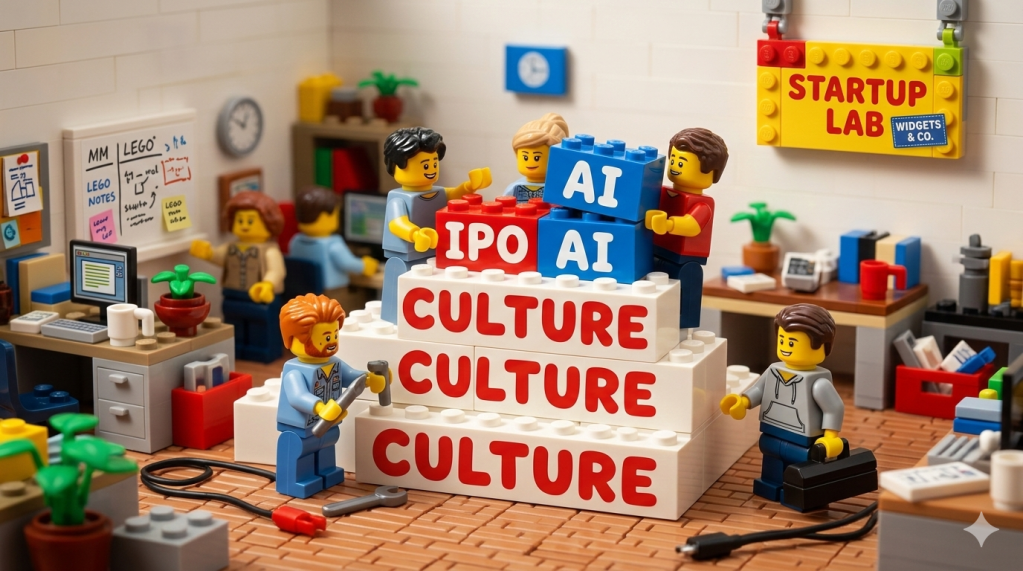
“Give me six hours to chop down a tree and I will spend the first four sharpening the axe.” — Attributed to Abraham Lincoln
Six trends. One variable. Most founders are missing it.
Every January, the VC class publishes their predictions — and this year, Crunchbase’s 6 Trends In Tech And Startups We’re Watching In 2026 is as bullish as it gets. IPOs. M&A. AI everything. Fintech. Bigger rounds, fewer winners, fundamentals first. Smart analysts, real data, credible forecasts.
And every year, the variable that determines whether any of it happens for your company specifically doesn’t make the forecast.
Workplace culture is the operating system every 2026 startup trend runs on — and most founders have never actually installed it.
Before going further, let’s be precise about what that means. Workplace culture is the shared values, beliefs, behaviors, and attitudes that define how decisions are made within a company. It’s the behavioral backbone that shapes what’s encouraged, discouraged, accepted, or rejected — and ultimately influences how people feel, perform, and grow at work. It is not a vibe. It is not free snacks and a “fun” Slack channel. It is organizational infrastructure — the system that determines how your company actually behaves when no one is watching.
And according to Harvard Business School researcher Noam Wasserman, 65% of high-potential startup failures are caused by people problems — co-founder conflict and leadership dysfunction — not market failure, not product failure. People problems. Culture problems. The forecast never mentions it.

Trend 1: The IPO Boom — Organizational Health Is Now Due Diligence
23 U.S. companies listed above $1B in 2025. The IPO window is open and experts expect acceleration in 2026.
Do you know what the IPO process actually demands? Twelve to eighteen months of internal pressure unlike anything a startup has faced. Institutional scrutiny that now includes Glassdoor scores, attrition patterns, and anonymous employee reviews. Investors have seen enough post-IPO implosions to know that a charismatic founder with a vague culture deck is a liability.
An IPO doesn’t reveal your culture. It amplifies it.
This trend won’t happen for you if your managers aren’t equipped and your employees don’t believe in the direction. You cannot IPO your way out of organizational dysfunction. The market prices it in before the S-1 does.
Which brings us to where a lot of that dysfunction first shows up: the war for talent.
Trend 2: The AI Acqui-Hire Wave — A $100M Confession
Big acquirers are buying seed-stage teams of under 100 people for $100M+ — not for the product, but for the talent. Everyone is calling it smart dealmaking.
It is a confession. Every acqui-hire is a company admitting it couldn’t design an environment where exceptional people stayed. MIT Sloan research shows toxic workplace culture is 10.4x more likely to drive attrition than compensation — meaning no amount of salary correction fixes a broken behavioral environment. The target startup didn’t win because of their product. They won because their founder designed conditions where elite talent chose them and kept choosing them.
This trend won’t happen for you if your best people keep leaving. You cannot be acqui-hired for talent you don’t have, and you won’t keep it without intentional culture design.
Retention and honest communication are inseparable — which is exactly what the next trend puts to the test.
Trend 3: AI Replacing Workers — Communication Culture Determines Who Survives
Crunchbase used the word “unfortunately” when forecasting continued AI-driven headcount cuts. That word is doing a lot of work.
The cultural threat isn’t the displacement — it’s the silence around it. The all-hands where leadership calls AI “augmentation” while the org chart is quietly being redrawn. Trust broken this way doesn’t come back, and a workforce running on anxiety doesn’t execute the strategy that gets you to your next milestone.
This trend happens to you instead of for you if your employees hear about the AI strategy from a layoff notice rather than from you, six months earlier, in an honest room.
That kind of organizational honesty is hard to maintain under normal conditions. In fintech, it’s nearly impossible without deliberate design.
Trend 4: The Fintech Boom — Scaling Culture Is the Compliance Risk Nobody Measures
$51.8 billion into fintech in 2025. Stablecoins, agentic payments, AI-native tools — 2026 looks stronger.
Fintech is one of the most punishing culture environments in tech. Startup-speed people operating under bank-level compliance pressure. The hire built for scrappy is now buried in SOC 2 audits. The team dynamic at 20 people doesn’t survive 200. Regulatory demands are tightening — and that environment breaks teams without the behavioral infrastructure to hold it.
This trend stalls for you if you’re scaling on velocity alone. The compliance moment arrives. The question is whether your culture absorbs it or fractures under it.
Fintech founders outside the Bay Area face this pressure with one fewer resource: easy access to capital. Which is where the next trend gets personal.
Trend 5: Capital Concentration — Culture Is the Moat When Capital Isn’t
Venture dollars are concentrating into a small cohort, mostly in the Bay Area. Fewer winners. Bigger rounds.
For founders building outside that geography — which is most of you — culture is your leverage. The best founders I’ve seen beat funding odds didn’t outspend competitors. They built environments where ambitious people chose them because the work was meaningful and the leadership was worth following. According to Deloitte‘s Becoming Irresistible report, mission-driven organizations have 40% higher retention — a compounding advantage that capital alone can’t buy.
For founders inside the concentration: the money is a sedative. It masks dysfunction. A funding round validates the pitch, not the company.
This trend won’t compound in your favor once capital has to produce returns. Money follows performance. Performance follows people. People follow culture.
And in a fundamentals-first market, that chain of causation is exactly what investors are now being paid to trace.
Trend 6: Fundamentals-First Investing — Culture Is the Fundamental VCs Haven’t Priced Yet
VCs say they’ll reward real AI advantage and punish “AI veneer on old ideas” — meaning AI as a thin cosmetic layer slapped onto an otherwise unchanged product or business model. Fine. Here’s what they haven’t said yet, but will: culture veneer gets punished too. A values statement with no behavior behind it. A DEI slide with no retention to show for it. A founder who talks about psychological safety and manages by fear.
The numbers are already there to find. Companies in the top quartile of employee engagement achieve 23% higher profitability than bottom-quartile peers, per Gallup’s lates global study. That delta shows up in the financials. Investors will find it.
Revenue growth, retention, and operational efficiency are all culture outcomes. You cannot have the fundamentals without the conditions that generate them.
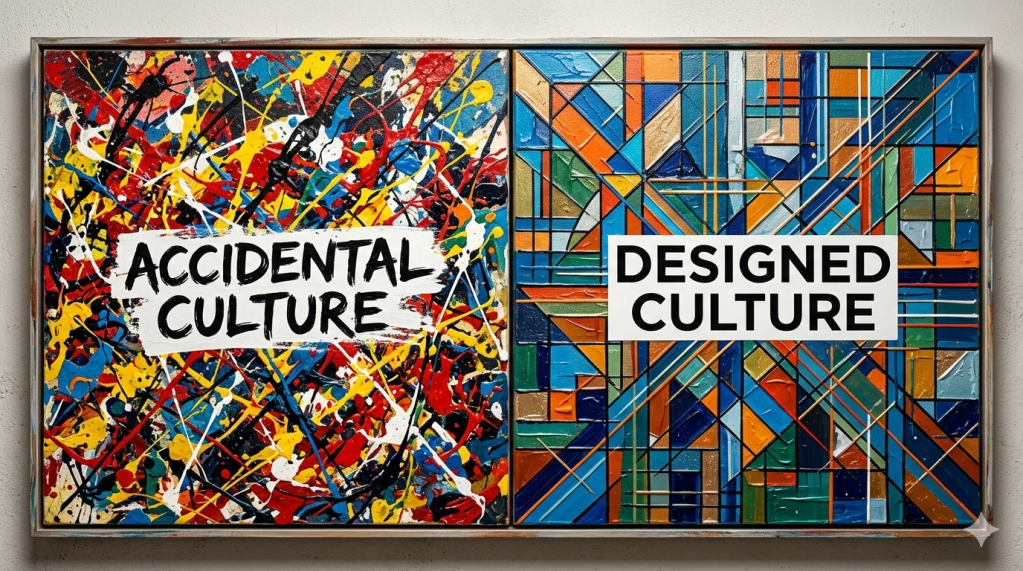
This trend won’t work for you if your culture is accidental. Accidental cultures produce accidental results.
“But Culture Is Soft.” Three Pushbacks — And Why They’re Wrong.
| Pushback | Why It’s Wrong |
|---|---|
| “We don’t have time — we’re building the product.” | Culture is being built whether you’re focused on it or not. Neglect is a design choice. By the time you have “time,” you’re managing the damage. CB Insights found 23% of startup failures cite the wrong team as a primary cause — that’s not a hiring problem, it’s a culture problem that showed up too late. |
| “People love working here — our culture is great.” | Cohesion at 12 people is chemistry, not culture. Culture is what survives scaling, hard decisions, and bad quarters. If you haven’t stress-tested it, you don’t know what you have. |
| “VCs don’t measure culture.” | They do — through attrition data, reference calls, and management tenure. They just call it “execution risk.” And they price it accordingly. |
What To Do About It
| Action | What It Does | |
|---|---|---|
| Quick Win | Survey your team anonymously this week: What does it feel like to work here? What would make you leave? | Closes the gap between the culture you think you have and the one your team actually experiences. |
| 90-Day Move | Define each company value as a specific, observable behavior — not a word on a wall. | Turns decoration into accountability. Values without behavioral definitions are just branding. |
| Long Game | Audit every open role’s interview process for culture-fit rigor equal to skills assessment. | Hiring is culture design. One wrong leadership hire undoes months of intentional work. |
The Only Forecast That Actually Matters

Born February 12, 1809, Abraham Lincoln was a self-taught lawyer who prepared relentlessly before power ever found him. He never picked up the axe first. The founders who will IPO, win acqui-hire exits, navigate AI disruption, and build fundamentals-first companies worth investing in didn’t either. They spent the time nobody else wanted to spend — sharpening the thing that makes every other effort possible — before the board asked for it, before the headcount justified it, before the market rewarded it.
Culture is not what you build after product-market fit. It is the axe. Every trend in the Crunchbase forecast is a tree. And in February — Lincoln’s birth month — it’s worth remembering that the most consequential leaders in history didn’t move fast and break things. They prepared deliberately, built durable systems, and executed when it mattered.
The question isn’t whether your culture matters in 2026. The question is whether you’ve sharpened it — or just been swinging and hoping.
Ekipo helps startup founders design workplace culture on purpose. If 2026 is the year you stop leaving it to chance, let’s talk.

Article was read & written by John-Miguel Mitchell who is the Founder and Lead Consultant at Ekipo LLC. If you’d like to learn more about how to design and build out the ideal workplace culture for your business, email him at jmitchell@joinekipo.com.
Liked the blog? Click on the subscribe button below to get new content delivered directly to your inbox every Friday.
 Ekipo
Ekipo 
Leave a comment