
Read and Written by John-Miguel Mitchell
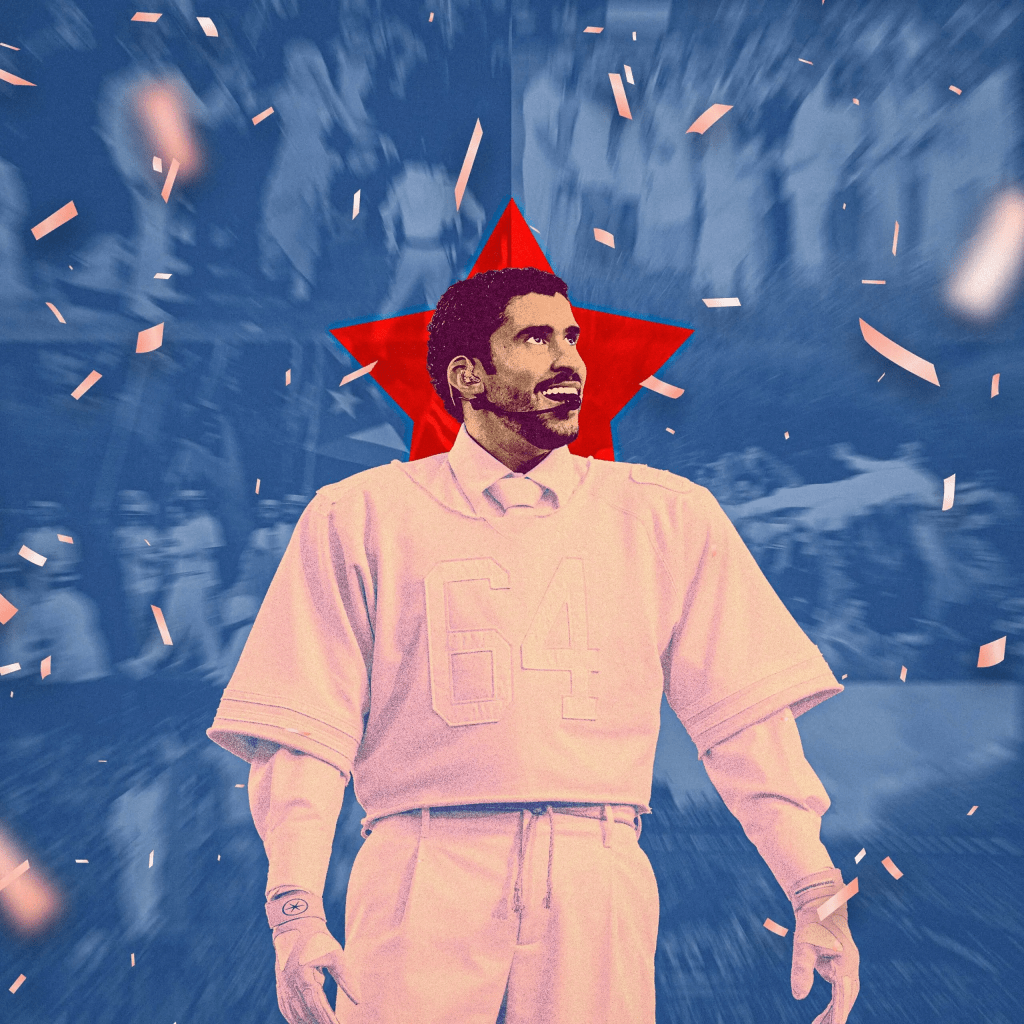
In the age of AI, growth is commoditized. Purpose is the only moat left—and most founders are abandoning it.
“You know, you may not be born in Puerto Rico, but Puerto Rican is definitely born in you.” -Rosie Perez
I love football.
Quick confession: when I look back at high school, I have three regrets — I didn’t take my homework seriously, I let toxic relationships distract me, and I didn’t play football. Every year, I look forward to the Super Bowl hoping my team (the 49ers) will finally lift the Lombardi trophy. But this year was different. For the first time in my adult life, I looked forward to see the halftime show than the game itself.
I wasn’t waiting to see the matchup between two irrelevant QBs. I was waiting to see what Benito Antonio Martínez Ocasio — Bad Bunny — would do with the biggest stage in American entertainment.
Because here’s what most people don’t understand about that halftime show from this previous Sunday: it wasn’t just a performance. It was a masterclass in everything startup founders claim to value but abandon the moment growth pressure hits.
Startups don’t break because they grow too slowly. They break because growth outpaces purpose — and founders focus on metrics that AI can replicate while abandoning the only advantages AI can’t copy: knowing why you exist and what you’re willing to sacrifice to stay true to it.
Bad Bunny walked onto the Super Bowl halftime stage and refused to optimize for the biggest possible audience.
The show opened with “Tití Me Preguntó” — sung entirely in Spanish. No English introduction. No warm-up with a familiar crossover hit. Just reggaeton from the first beat, unapologetically Latin music on the world’s biggest stage.
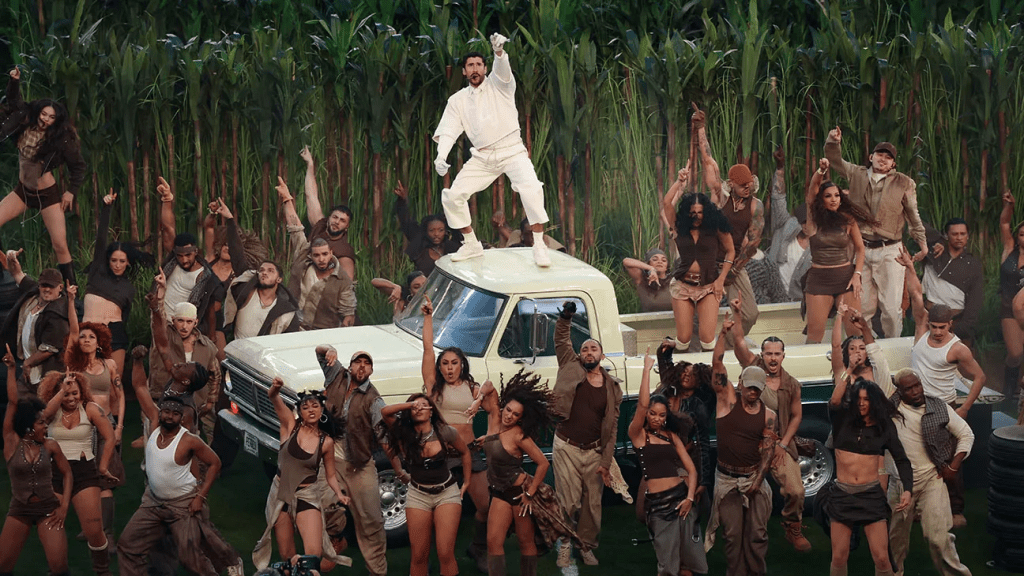
Midway through the performance, after celebration and dancing, Bad Bunny performed “El Apagón” — a protest song about Puerto Rico’s power crisis. Climbing atop electricity poles while holding the Puerto Rican flag, he critiques the privatization of the energy grid and the displacement of residents by corporate interests.
This wasn’t the safe play. Most artists would bury the political content or skip it entirely. Bad Bunny made it a centerpiece of his performance on the most expensive advertising platform in the world, watched by 123 million viewers.
Bad Bunny’s performance demonstrated two critical principles that most startups abandon:
- Purpose over growth. He led with identity, not commercial safety.
- Values that cost something. Every major decision came with a trade-off he accepted.
Here’s the bridge most founders miss: Purpose tells you WHY you exist. Values determine WHAT you’ll sacrifice to stay true to it.
The Data No One Wants to Face
If you think I’m being dramatic about founders abandoning purpose for growth, just check out how startup media is drowning in conversations, headlines and hot takes about growth rates, valuations, and TAM expansion. I swear after awhile it gives me a heache.
Here’s what actually happens: Startups get evaluated obsessively on growth potential, risk level, and market timing. Leadership, team alignment, culture, and execution capability get evaluated almost as an afterthought.
The metrics that predict whether you’ll still exist in five years get treated like nice-to-haves. The metrics that predict whether you’ll hit next quarter’s number get treated like existential requirements.
Meanwhile, the data that actually predicts survival gets ignored:
- 65% of startups fail because founding teams are misaligned on vision, values, and how to run the company.
- 75% of venture capital-backed startups fail.
- 42% of startups fail because they build something nobody wants (no market need).
Purpose isn’t a nice-to-have. It’s what keeps you standing when everything else is falling apart. It’s what prevents your team from fracturing when the market turns against you — because people can survive hard markets, but they can’t survive not knowing why the hard work matters.
Purpose Over Growth
So why do founders still optimize for growth first? Because they’ve inverted it: growth becomes the goal, purpose becomes the pitch. That’s backwards. And in the age of AI, it’s fatal.
AI is commoditizing everything you think makes you different. The features you shipped last quarter? Your competitor’s AI agent shipped them last night. The differentiated workflow you thought was your moat? Claude and GPT-4 replicate it in an afternoon.
The only moat left is the one AI can’t copy: why you’re building and who you’re building for.
An AI trained on Super Bowl halftime data would never recommend what Bad Bunny did. The algorithm would flag political content as risky. It would optimize for maximum engagement and commercial safety. It would tell him to open in English, bury the controversy, play it safe.
But that approach would have produced a forgettable performance. The algorithm can’t account for conviction. It can’t measure the resonance that comes from refusing to separate celebration from struggle.
When Bad Bunny opened with pure reggaeton in Spanish, he was choosing purpose over reach.
When startups open investor presentations with TAM slides before explaining why the problem matters, they’re choosing growth metrics over meaning.
When Bad Bunny made a protest song the centerpiece of his performance, he was choosing to spotlight his community’s struggles over commercial safety.
When startups bury their founding story in pitch deck appendices because “investors want to see numbers first,” they’re choosing to hide what makes them different.
If AI could build your product tomorrow, what would be left that’s worth defending? That answer is your actual purpose. Everything else is commodity.
How Purpose Gets Lost
No founder decides to abandon their purpose. It happens gradually.
You used to explain why this company matters in one sentence. Now it takes a paragraph that changes depending on who’s asking. When someone asks “what does your company do,” you start with features instead of purpose. Your all-hands meetings celebrate growth milestones without explaining how they advance the mission.
Bad Bunny’s performance had a clear arc: celebration → cultural education → political consciousness → generational handoff → collective celebration. Every element served the purpose. This wasn’t just entertainment — it was cultural representation that refused to separate joy from struggle.
When was the last time your company’s strategy had that kind of coherent arc?
Values That Cost Something

Purpose tells you why you exist. Values determine whether you’ll protect that purpose when it’s expensive.
You don’t build culture — you reveal it with every decision.
Bad Bunny’s halftime show was a series of expensive choices that honored stated values.
When Bad Bunny’s team faced NFL restrictions limiting field carts, they hired 380 performers to dress as blades of grass in the sugar cane scene. The constraint didn’t stop the vision—it forced creative problem-solving that stayed true to the cultural message while creating jobs.
When startups face budget constraints, they immediately cut differentiating features, lower hiring standards, or say yes to customers whose values conflict with yours.
Each of Bad Bunny’s choices came with a clear trade-off:
- Spanish lyrics → lost English-speaking engagement
- Wedding moment → lost performance time
- 380 grass performers → higher budget, but protected vision
- Flag recognition → shared spotlight instead of hoarding it
Every choice revealed what mattered most.
Now look at your last quarter of decisions. What did you gain? What did you sacrifice? Do those sacrifices align with your stated values? Or do they reveal that growth, speed, or optics are actually what you optimize for?
“But Bad Bunny Had Leverage We Don’t Have”
I can hear the pushback already. Let me address it directly.
| The Pushback | Why You’re Wrong |
| “Bad Bunny could afford to perform in Spanish because he’s already famous. Startups can’t afford to alienate customers.” | He made these choices at maximum exposure—125 million viewers, the biggest stage in entertainment. Performed entirely in Spanish. Result? One of the most-watched halftime shows in history. Specificity created resonance that broad appeal never achieves. |
| “You’re confusing clarity with rigidity. We need to pivot when the market tells us.” | His purpose (represent Latin culture authentically) stayed fixed. His tactics adapted constantly. NFL restricted field carts? He hired 380 people as grass. Solved around constraints without diluting mission. Purpose is the fixed point. Tactics are the variable. The question isn’t whether you adapt—it’s whether your team can follow you because they understand what you’re protecting. |
What Founders Can Do Now
Bad Bunny didn’t walk onto that stage unprepared. He knew exactly what he was protecting. Here’s how to get that same clarity:
| Timeframe | Actions |
| This Week | Write your one-sentence purpose. Don’t leave the room until you can explain why your company exists without mentioning your product. Test team alignment. Ask five random team members: “What’s our purpose?” Compare answers. Audit your last 10 decisions. Which stated values showed up vs. disappeared when inconvenient? |
| This Month | Add purpose to hiring. One question: “Why does solving this problem matter to you beyond a paycheck?” Reject candidates who can’t answer. Define your values operationally. For each stated value, define what behavior looks like when you’re living it vs. violating it. |
| This Quarter | Kill one misaligned initiative. Exit one customer, feature, or partnership that doesn’t serve your purpose—even if it’s generating revenue. Start every meeting with “why.” Begin leadership meetings by restating purpose before discussing tactics. |
| This Year | Codify your origin story. Make it specific. Repeat it until people can recite it. Document your non-negotiables. Write down 2-3 values that trump growth when they conflict. Make them explicit and public. |
The Companies That Last

My favorite moment came at the end — when Bad Bunny invited every country to share in the spotlight. Flags from across the Western Hemisphere flooded the stage. Performers carrying each nation’s colors, running toward something, not away from something.
That moment brought me to tears. Still does as I write this.
Because here’s what he understood that most founders forget: purpose isn’t about you. Values aren’t tested when they’re convenient.
Bad Bunny had the biggest platform in American entertainment. Thirteen minutes to represent himself, his career, his accomplishments. He could have made it all about Puerto Rico.
Instead, he made space. He said his only English words of the night: “God bless America.” Then in Spanish, he named every nation: “sea Chile, Argentina, Uruguay, Paraguay, Bolivia, Perú, Ecuador, Brazil, Colombia, Venezuela, Guyana, Panama, Costa Rica, Nicaragua, Honduras, El Salvador, Guatemala, Mexico, Cuba, República Dominicana, Jamaica, Haiti, Antigua, United States, Canada…”
He saved his motherland for last—Puerto Rico.
That’s purpose. Knowing why you exist clearly enough to put everyone else first.
That’s values. Giving up individual spotlight at the moment of maximum visibility because community matters more.
The companies that endure don’t hoard the spotlight. They create it for others. They know why they exist beyond growth. They protect what matters when it’s expensive.
Are you building something people run toward, not away from?
Bad Bunny showed 125 million people what leadership looks like when purpose and values actually govern decisions. Flags waving. People running forward together. Toward something bigger than any one nation, any one artist, any one company.
Your company isn’t your monument. It’s your contribution.
Build accordingly.
Questions For Every Founder
- If I asked five random people on your team “Why does this company exist?” — would they give me the same answer?
- Your last major decision under pressure — did you make it because it served your purpose, or because it served your growth targets?
- If your company disappeared tomorrow, what would be lost that AI couldn’t replace?

Article was read & written by John-Miguel Mitchell who is the Founder and Lead Consultant at Ekipo LLC. If you’d like to learn more about how to design and build out the ideal workplace culture for your business, email him at jmitchell@joinekipo.com.
Liked the blog? Click on the subscribe button below to get new content delivered directly to your inbox every Friday.
 Ekipo
Ekipo 
Leave a comment