
Read and written by John-Miguel Mitchell

Why Do Half of All Startups Fail Within Five Years?
51.6%
That’s the number of U.S startups that survive the 5 year mark. This is according to new data from the Bureau of Labor Statistics. That’s actually down from 55% in 2020.
Here’s what the data doesn’t say: these companies don’t die because they run out of money. They die because they run out of trust.
The pattern isn’t random—it mirrors how most founders lead: reactive, heroic, short-term. While founders obsess over product-market fit, they ignore leader-culture fit: the alignment between a founder’s decision-making philosophy and the company culture they’re actually building.
In an era where AI is scaling faster than emotional intelligence, leadership philosophy has quietly become the most underdeveloped competitive moat in startups.
Key Takeaways (2-Minute Summary)
- The survival crisis is a leadership crisis: 48.4% of startups fail within five years primarily due to leadership infrastructure gaps, not market conditions
- Trust is reciprocal architecture: High-performing teams operate on mutual trust systems, not top-down control
- AI exposes leadership gaps: As automation handles tactical CEO functions, the irreplaceable skill becomes trust-building and cultural coherence
- Philosophy beats tactics: Sustainable scaling requires treating leadership as infrastructure, not improvisation
Leadership Philosophy as Competitive Moat

The next great startup advantage won’t come from faster code, leaner burn rates, or better investor decks — it’ll come from leaders who understand the physics of trust.
Too many founders lead reactively — chasing growth, surviving boards, micromanaging talent — while ignoring the deeper infrastructure that holds everything together: how they think, decide, and earn belief.
Leadership, like culture, isn’t what you say in town halls; it’s what your team experiences when things get hard.
That’s why this moment — of AI acceleration, valuation whiplash, and investor skepticism — demands a new kind of founder: one who treats leadership not as personality, but as philosophy and architecture.
But what does leadership-as-philosophy actually look like in practice? Sometimes the best lessons come from unexpected places.
Case Study #1: Dave Roberts’ Masterclass in Trust-Based Leadership
Minutes after one of the most electric Game 7 finishes in World Series history, Dodgers manager Dave Roberts stood on the platform—confetti raining, cameras flashing—and said something few leaders in his position ever do (start video at the 2min mark).
“I want to give a shoutout to the wives…the wives of the players, the coaches, the front office. You ladies are the glue.”
That wasn’t media polish. That was leadership philosophy in motion.
While most coaches flex strategy or talent, Roberts widened the circle of gratitude—to the people who don’t wear the jersey but hold the team together anyway.
What Roberts Understands That Most Founders Don’t
Roberts’ approach maps to three leadership principles that directly predict startup survival:
1. Reciprocal Trust Architecture
When asked how he managed to use nearly every player on the roster, Roberts said: “I trust them—I trust every single one of them because they trust me.”
No frameworks. No jargon. Just reciprocity.
2. Recognition Beyond Performance Metrics
Roberts publicly honored the opponent, his coaching staff, and families—not just star players. Contribution isn’t measured solely by visible output.
3. Cultural Acknowledgment of Invisible Labor
By recognizing “the glue” roles, Roberts reinforced that sustainable performance depends on systems of support, not heroic individualism.
Most founders? They skip straight to the champagne.
So how do we translate Roberts’ instincts into actionable leadership strategy for the startup world?
The Leadership Lesson: Philosophy as Operating System
At Ekipo, we frame it this way: Leadership isn’t about managing people. It’s about managing philosophy.
Your leadership philosophy is the operating system under every decision, every conflict, every Slack message.
Defining Leader-Culture Fit
Leader-culture fit: The alignment between a founder’s decision-making philosophy and the organizational culture they’re building—distinct from culture-add or values fit. It’s the congruence between how you lead and the kind of workplace you’re creating.
When this alignment breaks, you get:
- High performers who are cultural toxins
- Mission statements no one believes
- Policies that contradict practice
- Attrition among your best culture carriers
Roberts gets it. He understands that:
- Respecting your rival keeps your ego in check
- Recognizing your team builds credibility
- Honoring the unseen creates belonging
But this goes deeper than just philosophy. We’re talking about role models.
Who are you willing to follow into the fire? Who are you willing to chase midstream? Who are you willing to follow in the darkness?
These aren’t abstract questions. They’re the test every team applies to their founder when the product doesn’t work, when the funding falls through, when the best engineer quits on a Friday afternoon.
Here’s the uncomfortable truth most founders avoid: trust isn’t just nice-to-have. It’s the only currency that still matters when everything else gets automated.
What AI Is Beginning to Expose
Here’s the paradox: in an age where AI can automate almost everything, trust has become the most valuable—and most exposed—leadership asset.
As Joe Procopio warned in “AI Will Replace CEOs Next”, many CEOs assume their roles can’t be automated. But AI is already handling core executive functions:
- Analyzing performance data and identifying patterns
- Delivering standardized feedback
- Optimizing resource allocation
- Acting as avatars on video calls
When your leadership is built on control instead of conviction, the algorithm starts to look more consistent than you.
Procopio’s warning cuts deep: “When you’re winning, you can get away with a lot. The reverse is its own cautionary tale.”
Translation: founders who lead through command-and-control can mask their leadership gaps during growth. But when things get hard—when the market shifts, funding dries up, or key people leave—the absence of trust becomes catastrophic.
The critical inflection point isn’t whether AI will replace tactical leadership functions. It’s whether founders can build the one thing machines can’t: deep, reciprocal trust that holds when everything else breaks.
Neglecting the unseen structures of trust isn’t just expensive—it’s existential. And nowhere is this more visible than in companies where leadership becomes indistinguishable from a single person’s identity.
Case Study #2: Tesla’s $1 Trillion Leadership Concentration Risk

Tesla shareholders recently approved Elon Musk’s compensation package—potentially worth over $100 billion and tied to the company’s $1+ trillion valuation—making it the largest executive pay deal in corporate history.
Investors trust his genius so much they’re willing to bet the company’s future on it. But critics warn that Tesla has become too reliant on one person’s vision and decision-making.
That’s not strategy—that’s cultural concentration risk.
Leadership philosophy isn’t about how much control you hold; it’s about how much trust your system can sustain without you.
When your company’s entire identity, energy, and culture are tied to one person, you’re not scaling a business—you’re scaling belief. And belief without balance breaks.
So what separates companies that scale sustainably from those that flame out spectacularly? The answer lies in understanding the relationship between time, infrastructure, and leadership habits.
The Five-Year Wall: Where Leadership Infrastructure Matters Most
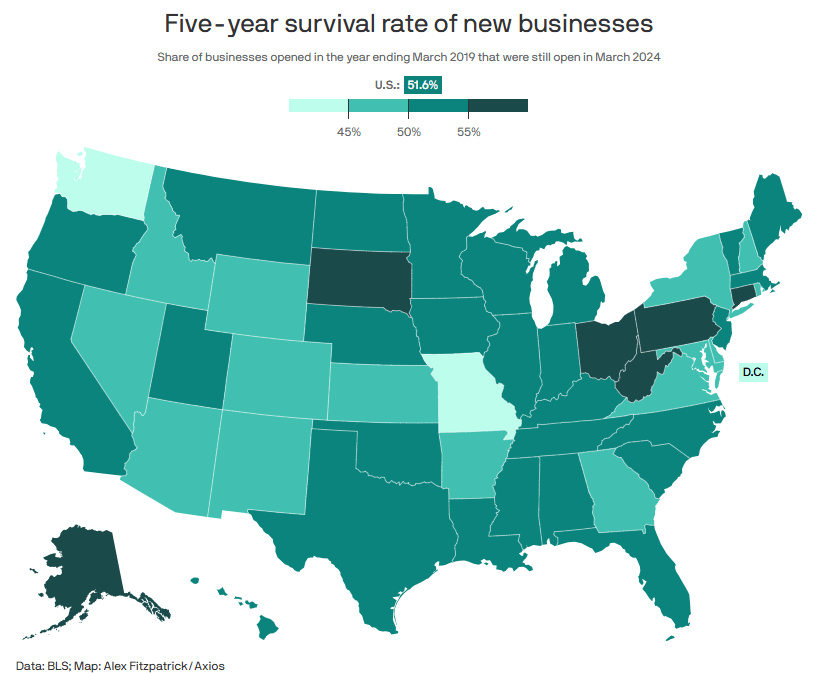
Look closely at the BLS startup survival data—the founders who make it past that five-year wall aren’t necessarily the most visionary; they’re the ones who treat leadership like infrastructure, not improvisation.
But knowing the problem isn’t enough. Most founders struggle because they’ve never been forced to articulate what they actually believe about leadership. So let’s make it concrete.
The Founder’s Leadership Philosophy Audit: Seven Critical Questions
| 🔢 Question | 💬 Why It Matters / Ekipo Insight |
|---|---|
| 1. What are the three non-negotiable behaviors your leadership team must model—even under pressure? | If you can’t name them instantly, your team definitely can’t. Non-negotiables aren’t what you say in onboarding; they’re what you enforce when it costs you something. |
| 2. How do you make decisions when data is incomplete and stakeholders disagree? | Your decision-making framework under ambiguity reveals your actual values. Do you optimize for speed, consensus, analysis, or gut? Your team watches this pattern more than any OKR. |
| 3. What’s the most recent decision you reversed after getting feedback—and who knew about it? | Leaders who can’t change their minds can’t earn trust. If you haven’t publicly reversed course in the last quarter, you’re either perfect (unlikely) or closed to input (fatal). |
| 4. Who on your team would you rehire tomorrow—and who are you “hoping improves”? | Hope is not a performance management strategy. Every person you’re passively tolerating teaches your A-players that mediocrity is acceptable. |
| 5. When was the last time you gave developmental feedback within 48 hours of observing the behavior? | Delayed feedback isn’t kindness—it’s compounding interest on cultural debt. If you’re waiting for 1-on-1s or reviews, you’re letting problems calcify. |
| 6. What’s the worst cultural behavior you’ve tolerated from a high performer, and what did it cost you? | Every exception you make sends a signal. Protecting a toxic rockstar tells everyone results matter more than respect. Calculate the real cost: who left, who disengaged, who stopped trusting you. |
| 7. If you left tomorrow, who would your team say “carries the culture” in your absence? | If you can’t name 3-5 people, you’ve built a cult of personality—not a culture. If those people are all leaving, you’re about to find out what you actually built. |
These aren’t theoretical exercises. They’re diagnostic tools. Your answers reveal whether you’re building a company that scales—or a dependency that collapses.
And yet, even with perfect self-awareness, founders still face the same pushback. Let’s address them head-on.
Common Pushbacks (and Why They’re Wrong)
| Pushback | Reality Check |
|---|---|
| “Trust doesn’t pay the bills.” | Sustained results depend on trust. Friction kills speed; distrust multiplies drag. A 2023 Gallup study found that low-trust organizations lose $4,700 per employee annually to disengagement. Trust is the fuel that converts performance into progress. |
| “Some of my top performers are toxic, but they deliver.” | That’s how decay begins. Protecting results over respect might win the quarter but it’ll lose the company. Long-term trust requires short-term courage. |
| “This sounds soft.” | It’s not soft—it’s structural. Culture is infrastructure. You can’t scale systems people don’t believe in. What looks “soft” today becomes tomorrow’s moat—or mess. |
The Takeaway: What AI Can’t Replace

Dave Roberts didn’t win because he had the best roster. He won because he built the deepest reservoir of trust—between players, coaches, families, and a city.
And here’s the paradox for every founder racing into an AI-driven future: While everyone worries about what machines will take from leadership, the real question is what humans will protect within it.
- Trust.
- Philosophy.
- The invisible glue of genuine commitment.
AI might replace the CEO seat. But it can’t stand on a stage, tip its hat to the opponent, or say, “I trust them…because they trust me.”
That’s your moat.
That’s your model.
That’s leadership.
Questions for Founders & VCs
- How do I build trust as a startup founder when everything is moving so fast and I’m making it up as I go?
2. My leadership style got us to product-market fit, but now we’re scaling and things are breaking. Do I need to change who I am?
3. I have a brilliant engineer who delivers 10x output but creates constant team friction. How do I balance performance and culture?
4. When evaluating founders for investment, what leadership philosophy red flags should we watch for beyond the pitch?
5. We’re seeing AI automation claims in every deck. How do we evaluate whether a founder’s leadership will remain relevant as AI handles more tactical CEO work?

Article was read & written by John-Miguel Mitchell who is the Founder and Lead Consultant at Ekipo LLC. If you’d like to learn more about how to design and build out the ideal workplace culture for your business, email him at jmitchell@joinekipo.com.
Liked the blog? Click on the subscribe button below to get new content delivered directly to your inbox every Friday.
 Ekipo
Ekipo 