
Read and written by John-Miguel Mitchell
I’ve stayed in Las Vegas several times — and driven past it countless more on my way from California to school in Utah.
Every time, it surprises me how much it’s grown. Not just the Strip — but the schools, neighborhoods, and suburbs pushing deeper into the desert.
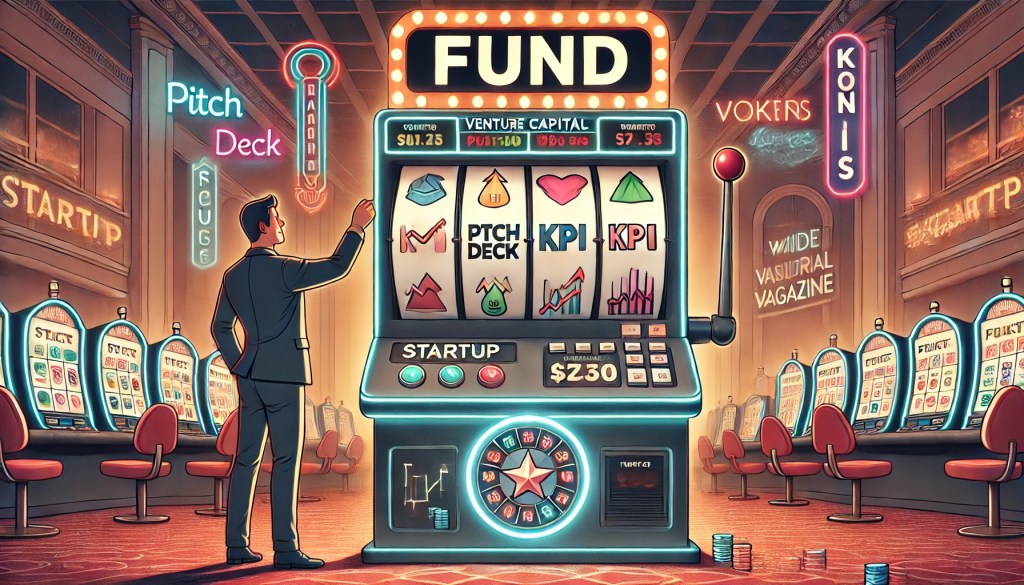
Vegas isn’t just a gambling town anymore. It’s an ecosystem — a trillion-dollar industry built around entertainment, analytics, and psychology.
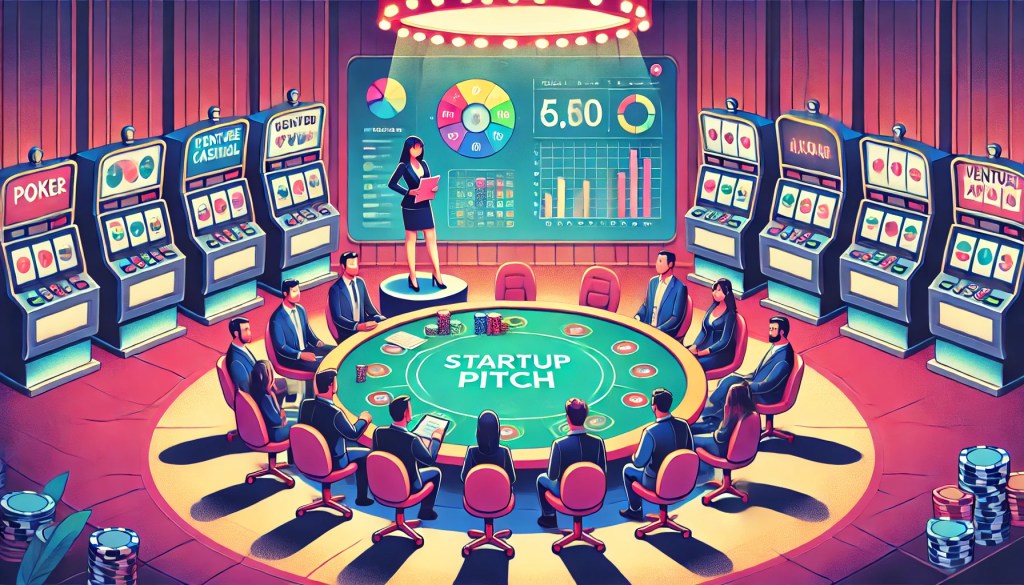
Casinos aren’t palaces of luck — they’re data companies with chandeliers. They model risk, track behavior, and manage emotion at scale. And whether we admit it or not, venture capital has started doing the same.
Both industries thrive on analytics disguised as intuition.
In fact, the global gambling market alone hit $773 billion in 2023 and is projected to reach $1 trillion by 2030.
Meanwhile, VC deal flow has become just as algorithmic — driven by pattern recognition, FOMO, and quantifiable “gut feel.”
Investing isn’t gambling — there’s diligence, modeling, and fundamentals.
But the psychology feels eerily familiar:
- High-stakes bets
- Asymmetric outcomes
- A few jackpots masking thousands of quiet losses
Both worlds run on conviction and probability.
And both crumble when the table tilts.
In a casino, a tilted table means gravity itself works against you.
In venture, it’s when the cultural foundation beneath a company warps — leadership fractures, values drift, trust thins.
Everything looks stable… right up until it isn’t.
At Ekipo, we believe:
Investors bet on founders. We protect those bets.
Because in venture — just like in Vegas — the biggest losses aren’t sudden. They’re slow. Silent. Compounding.
And the data backs it up: 70% of venture-backed startup failures are tied to culture-related issues.
Culture isn’t the jackpot — it’s the house edge that keeps the odds in your favor.
♠️ 1. Founder Dysfunction & Leadership Gaps
Every casino knows the quickest way to lose isn’t bad luck — it’s bad math. Founders are no different.
When leadership fractures, capital confidence collapses.
Misalignment between co-founders or between founders and investors quietly distorts every future decision — hiring, scaling, even fundraising.
Anecdote:
A promising AI startup hit $15 million ARR in two years. Then the CEO and CTO split over “strategic vision.” The board intervened, but key hires left, the next round stalled, and morale cratered. The product was strong — but leadership trust was gone.
| Pushback | Rebuttal |
|---|---|
| “Leadership conflict is inevitable — that’s just founder life.” | True, but unmanaged conflict erodes trust faster than any competitor. Alignment isn’t avoiding friction; it’s operationalizing it. |
| “The market decides success, not the founders’ relationship.” | The market decides timing. Founders decide survival. Misalignment wastes both. |
You don’t lose money because of bad ideas — we lose it because the founders can’t stay in the same room.
And once leadership misaligns, culture starts to drift — slowly at first, then all at once.
♦️ 2. Culture Drift & Execution Risk

When founders lose alignment, teams lose clarity. That’s culture drift — when execution speed drops not because people stop caring, but because they stop believing the story.
Anecdote:
A logistics startup’s “radical transparency” eroded as it scaled. Town halls became scripted. Decisions slowed. Within months, turnover hit 22%.
The founder called it “attrition.” The investors called it “culture drift.”
| Pushback | Rebuttal |
|---|---|
| “Culture is too fuzzy to measure.” | It’s not. Execution speed, retention, and engagement are culture metrics. What you can’t measure, you can’t scale. |
| “We’ll fix culture once growth stabilizes.” | Culture is the stabilizer. Drift compounds during growth, not after it. |
Founders will often express, “We didn’t burn out from the workload. We burned out from the chaos.”
When culture drifts, leaders grasp for shortcuts — and lately, nothing tempts like AI.
♥️ 3. AI Risk in Portfolios
AI has become the new poker table: everyone’s sitting down, few know how to play.
Used well, it compounds efficiency.
Used blindly, it automates confusion.
Anecdote:
A Series B company replaced onboarding with AI-driven scoring.
Efficiency soared — and so did turnover. Employees felt replaced, not empowered. Customer complaints doubled in a quarter. Automation fixed the process but broke the culture.
| Pushback | Rebuttal |
|---|---|
| “We can’t afford to slow down AI adoption.” | You can’t afford not to. Productivity gains mean nothing if they drain purpose. Efficiency ≠ clarity. |
| “Automation will handle our people problems.” | Automation amplifies people problems. Machines can’t align human priorities — leaders can. |
How many times do you hear founders say, “We replaced meetings with models — and still no one’s talking.”
And when trust cracks — whether between humans or systems — the damage doesn’t stay internal. It shows up in headlines.
♣️ 4. Scandals, Reputation & Compliance
When thieves broke into the Louvre Museum and stole France’s crown jewels just a couple of days ago, they didn’t hack the system — they slipped through its blind spots.
That’s exactly how governance risks unfold: quietly, invisibly, until they’re priced in by the market.
Anecdote:
A fintech startup lost a major partner when a routine audit revealed compliance lapses. No fraud — just neglect. But perception doesn’t care about nuance. Their next round’s valuation dropped 25%.
| Pushback | Rebuttal |
|---|---|
| “We’re too small for compliance to matter yet.” | That’s what every company says — until the cost of fixing it outweighs prevention. |
| “Governance slows us down.” | Governance accelerates trust. It’s the difference between a scandal and a story of resilience. |
Governance isn’t sexy — but neither is cleaning up a crisis.
At scale, those unseen cracks become valuation discounts. The culture risk doesn’t fade — it gets priced in.
🏁 5. Exit & Growth-Stage Culture Risk
By late stage, investors assume the risk curve flattens.
It doesn’t. It changes shape.
IPOs stall, acquirers walk, and liquidity thins as governance gaps widen.
Anecdote:
A Series D SaaS firm lost its acquirer days before signing when negative employee reviews surfaced mid-diligence.
The buyer flagged it as “leadership inconsistency.”
Translation: culture cracks cost millions.
| Pushback | Rebuttal |
|---|---|
| “At exit, performance matters more than culture.” | Performance is culture at scale. Execution discipline is culture institutionalized. |
| “Once we’re profitable, culture takes care of itself.” | Profitability hides dysfunction — it doesn’t heal it. Culture debt always comes due. |
Investors may not explicitly say it, but implicitly, they’ll say “We underwrite execution, not dreams.”
In venture — as in Vegas — the house always wins when it manages the odds.
🎯 The House Edge

Casinos don’t need to win every hand — they just need the odds to tilt 51% in their favor.
Venture investors are no different.
A single deal might go sideways, but over time, the firms that systematize how they manage risk — how they evaluate founders, align boards, and monitor culture — are the ones that consistently outperform. That’s not luck. That’s structure.
Culture is that structure. It’s the house edge that protects your portfolio when the market deals a bad hand.
At Ekipo, we help investors see what traditional due diligence misses — the invisible odds shaping founder alignment, execution health, and leadership resilience.
Because in venture, as in Vegas, the table tilts toward whoever understands the odds — not whoever plays the loudest hand.
Questions for VC Firms
- If culture is your house edge, why aren’t you measuring it?
- Are you underwriting execution — or emotion?
- How many portfolio losses were really market failures — and how many were cultural implosions you didn’t see coming?
- Would you rather be the casino — or just another player at the table?

Article was read & written by John-Miguel Mitchell who is the Founder and Lead Consultant at Ekipo LLC. If you’d like to learn more about how to design and build out the ideal workplace culture for your business, email him at jmitchell@joinekipo.com.
Liked the blog? Click on the subscribe button below to get new content delivered directly to your inbox every Friday.
 Ekipo
Ekipo 