
Read & Written by John-Miguel Mitchell, Founder of Ekipo
Over the next three weeks, we’ll be breaking down one of the most misunderstood levers of startup success — workplace culture — through a three-part series:
- Part 1: Challenges for Startup Founders (this post)
- Part 2: Challenges for VC Firms
- Part 3: Solutions for Both — How to Scale Without Breaking
This first installment focuses on the invisible forces that quietly make or break founders — the cultural cracks that appear long before metrics do.
Getting Started
Every founder wants to scale.
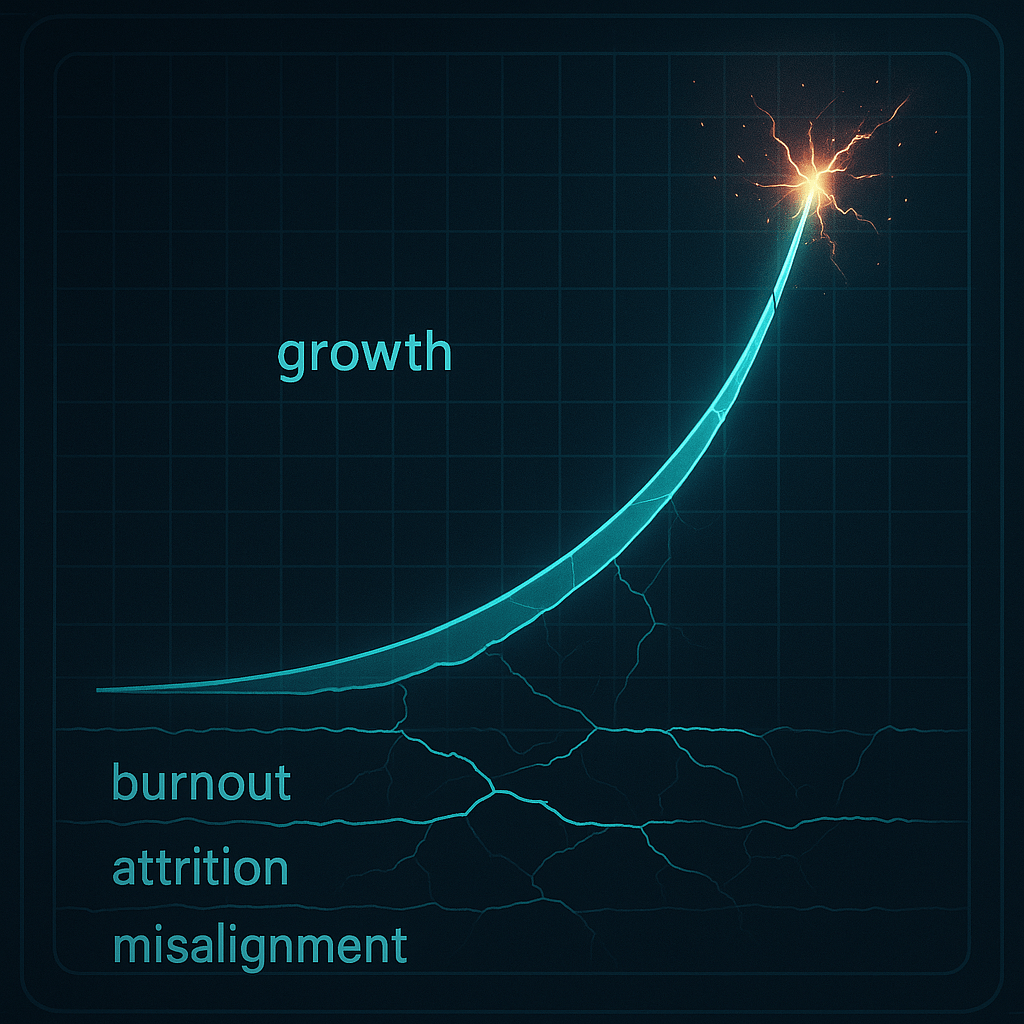
But scaling doesn’t just test your market — it exposes your culture.
At Ekipo, we believe this truth defines modern leadership:
you can’t build sustainable companies on cultural shortcuts.
Every day, companies push for better products, greater efficiency, and happier customers. Yet too many leaders still bet on the philosophy that a cut-throat, high-pressure, take-no-prisoner culture will drive their financial success.
They call it “the game.” But what they’re really building is debt — culture debt.
That kind of pressure may yield short-term gains, but it always collects long-term costs: exhausted teams, fractured trust, rising attrition, and discounted valuations.
It doesn’t have to be this way. In a world shaped by fast-moving technology, transparent feedback loops, and shifting expectations about what work should feel like, culture isn’t a perk.
It’s infrastructure.
And according to the Startup Genome Project, 70% of startup failures are linked to premature scaling, with cultural misalignment as a key contributing factor.
Here’s what that looks like in practice — the five culture traps that quietly break founders long before the market does:
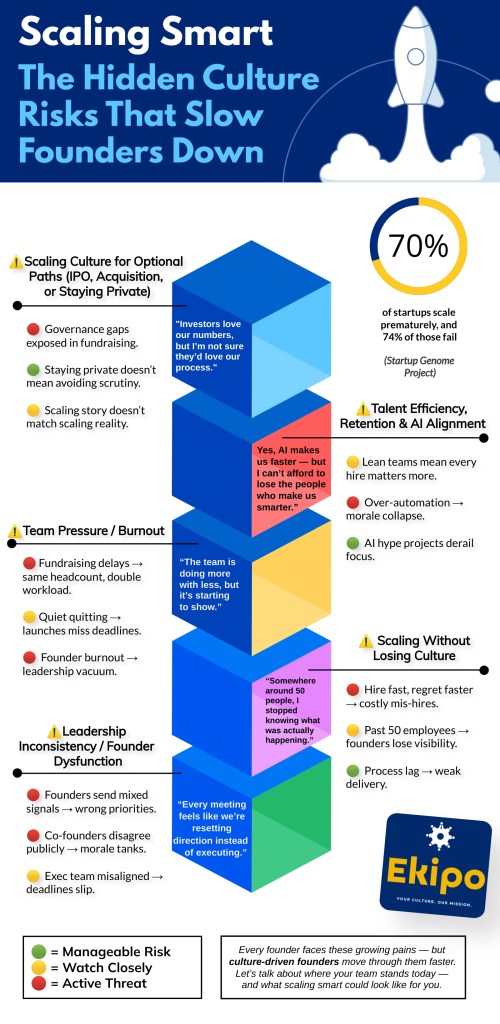
So let’s unpack the five biggest cultural challenges founders face — and what happens when they go unaddressed.
⚠️ 1. Leadership Inconsistency & Founder Dysfunction

Startups don’t fail because founders lack vision.
They fail when leadership loses alignment — when growth outpaces trust.
Case: Bolt (2022–2023)
Bolt, once valued at $11 billion, became a cautionary tale in leadership volatility. Public disputes between founder Ryan Breslow and the board fractured investor confidence and internal morale. Employees described whiplash from shifting priorities and reactive decision-making.
Data Point:
Research from Harvard Business Review shows that 65% of high-potential startups fail due to co-founder conflict and leadership dysfunction.
| 🧩 Pushback | 💡 Rebuttal |
|---|---|
| “We just move fast — alignment slows us down.” | Misalignment slows you more. Every conflicting message costs execution speed, trust, and clarity. |
| “We’re too early-stage to need structure.” | Early chaos sets cultural DNA. Without shared principles, every new hire inherits confusion, not culture. |
Alignment isn’t bureaucracy — it’s an anchor point for execution.
When leadership moves out of rhythm, the rest of the company loses its center of gravity.
Once leadership alignment starts to wobble, the next risk accelerates — growth without cultural grounding.
⚠️ 2. Scaling Without Losing Culture
At ten people, culture is instinct.
At one hundred, it’s operational.
At one thousand, it’s invisible — unless it’s intentionally designed.
Case: Hopin (2022–2023)
Hopin soared to a $7.8 billion valuation before collapsing under its own growth. As headcount surged, its identity evaporated. Teams worked in silos, leadership shifted strategy often, and morale bottomed out before the company sold its core business to RingCentral.
Data Points:
- 74% of startups admit their hiring process isn’t structured or scalable.
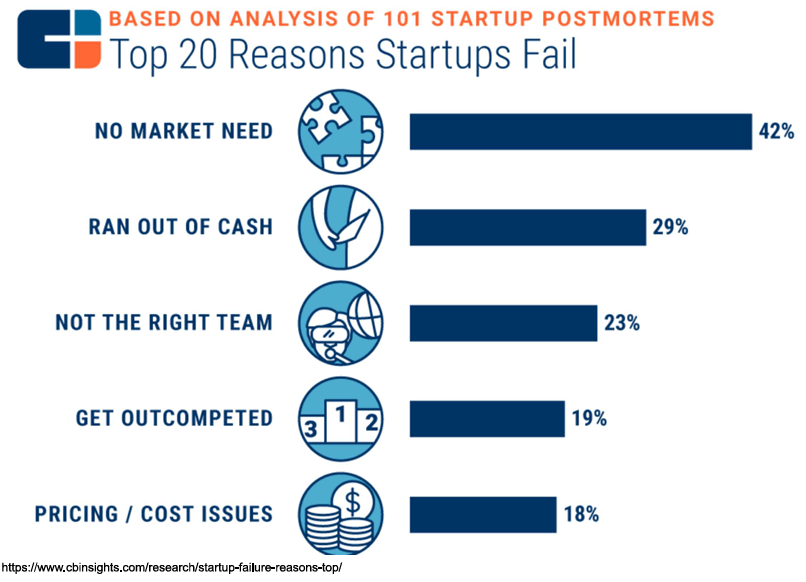
- “Not the right team” ranks among the most cited causes of failure in CB Insights’ startup postmortems.
| 🧩 Pushback | 💡 Rebuttal |
|---|---|
| “We hire smart people — they’ll figure it out.” | Even brilliant people can’t follow invisible rules. Clarity is the true competitive edge. |
| “Culture will just evolve as we grow.” | It will — but not necessarily in your favor. If you don’t design it, drift designs it for you. |
Culture drift doesn’t announce itself. It accumulates quietly until what you stand for is no longer recognizable.
When culture drifts, even the most capable teams feel the strain — and that strain soon becomes burnout.
⚠️ 3. Team Pressure & Burnout
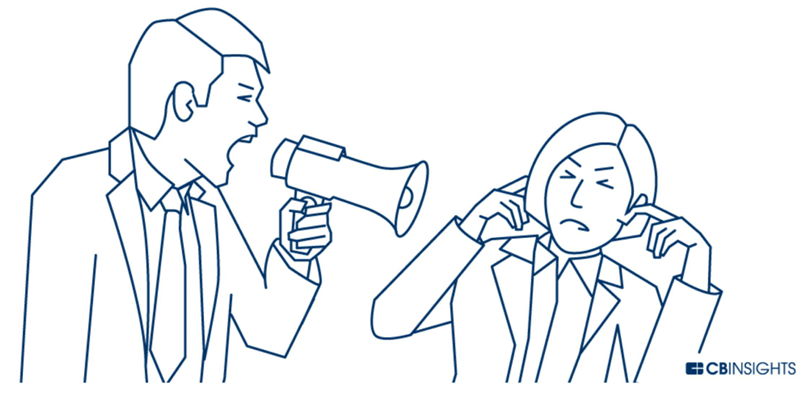
Startup mythology glorifies endurance.
“Work harder, longer, faster” becomes the badge of belonging — until it burns people out.
Case: Carta (2024)
Carta, the cap-table management platform, faced backlash when clients accused it of using their data to compete against them. Beneath the headlines was a deeper issue: a culture running on fumes. Employees described blurred boundaries, long hours, and chronic stress.
Data Point:
According to MIT Sloan, toxic workplace culture is 10.4X more likely to drive attrition than pay issues.
| 🧩 Pushback | 💡 Rebuttal |
|---|---|
| “Pressure is part of startup life.” | Pressure only fuels performance when trust exists. Without safety, pressure turns to fear. |
| “Our people know what they signed up for.” | No one signs up to burn out. High standards without rest or purpose lead to attrition, not excellence. |
Burnout doesn’t happen because people stop caring.
It happens because they stop believing their effort makes a difference.
When burnout becomes the norm, founders often reach for tech and efficiency tools — which only magnify what’s already broken.
At Ekipo, we believe work should inspire, not exhaust.
When people feel valued, trusted, and supported, performance becomes a byproduct — not a burden.
⚠️ 4. Talent Efficiency, Retention & AI Alignment
AI isn’t a culture fix — it’s a culture amplifier.
It magnifies whatever already exists, good or bad.
Case: Stability AI (2023–2024)
After a meteoric rise in the generative-AI race, Stability AI faced layoffs, leadership exits, and a CEO resignation. Reports pointed to internal tension, financial strain, and lost trust amid relentless growth.
| 🧩 Pushback | 💡 Rebuttal |
|---|---|
| “AI makes us more efficient — people just need to adapt.” | Efficiency without empathy accelerates disengagement. Technology can’t fix a trust deficit. |
| “Automation reduces people problems.” | It reduces communication — not conflict. Culture is still the only algorithm that scales predictably. |
Automation can’t replace meaning. Efficiency without empathy leads to disengagement — and disengagement compounds like debt.
Culture remains the only algorithm that scales predictably. And when scaling gets messy, founders start chasing “optional paths” — IPOs, acquisitions, or pivots — without realizing that fragile culture breaks under all of them.
⚠️ 5. Scaling Culture for Optional Paths (IPO, Acquisition, or Staying Private)
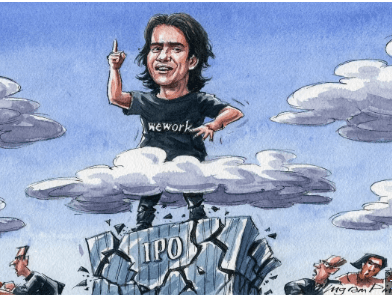
Founders love to say they’re “keeping their options open.”
But most aren’t built for one exit, let alone three.
Case: WeWork (2023 Bankruptcy Filing)
WeWork’s final collapse wasn’t about real estate — it was about unchecked culture. After years of leadership instability and reckless governance, the $47B giant filed for bankruptcy in 2023, its hype undone by hubris.
| 🧩 Pushback | 💡 Rebuttal |
|---|---|
| “Governance slows innovation.” | Governance sustains innovation. Guardrails don’t limit creativity — they keep it alive under scale. |
| “We’ll build structure once we’re bigger.” | By then it’s too late. You can’t retrofit trust into a broken culture. |
Data Point:
Research in the Journal of Banking & Finance shows that companies with strong internal culture earn higher IPO valuations and longer-term stability.
Governance isn’t red tape. It’s risk management. Without it, optionality turns into fragility — fast.
⚡ 2025 Flash Risks (Emerging but Accelerating)
One more factor founders can’t ignore: the Return-to-Office & Hybrid Culture Wars. We’re watching teams fracture under inconsistent policies and unclear expectations — remote workers feeling sidelined, in-office teams feeling micromanaged, and morale quietly eroding across both.
If you want a deeper look at this accelerating risk — and how flexibility, trust, and rhythm can coexist — check out our earlier deep dive:
👉 Workplace Flexibility: It’s Not as Complicated as You Think.
These cultural risks aren’t just patterns — they’re predictable failure points. And that’s exactly why Ekipo exists.
The Bigger Picture: Why Ekipo Exists

These aren’t isolated founder problems. They’re systemic leadership patterns — the byproduct of chasing speed while ignoring structure.
At Ekipo, we see it every day. Companies scale product, revenue, and visibility — while their culture quietly fractures. What begins as miscommunication becomes turnover. What starts as founder tension becomes valuation loss.
That’s why we built Ekipo.
We partner with founders and investors who refuse to accept burnout and dysfunction as the cost of ambition. We help them treat culture as core infrastructure — the system that holds everything else together.
Our frameworks clarify values, align leadership, and build operating rhythms that sustain execution under pressure. We help VCs diagnose hidden culture risks early — before they erode portfolio health and investor confidence.
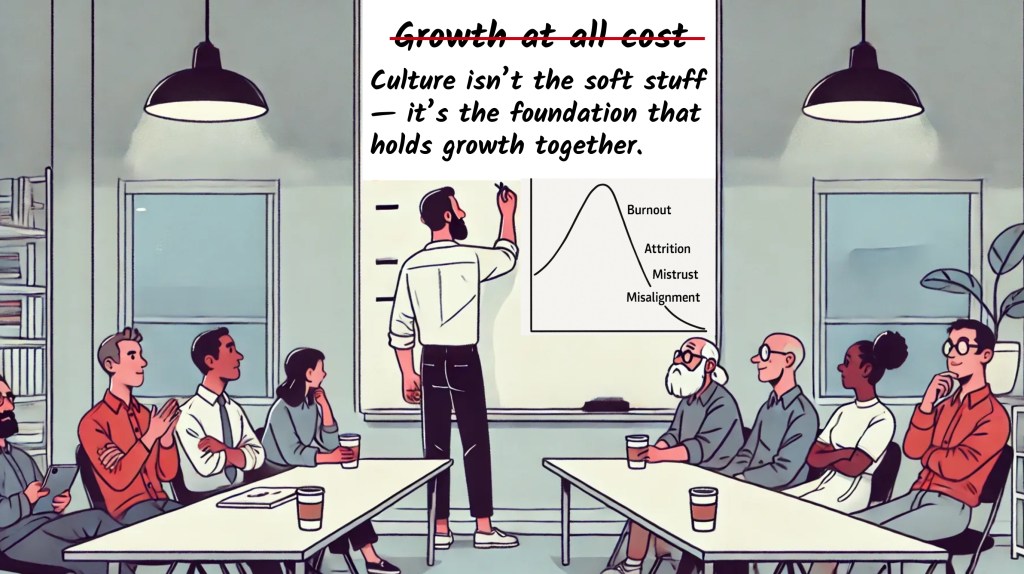
Because culture isn’t the “soft stuff.” It’s the foundation that holds growth together.
We started Ekipo because we believe work should mean more than survival. When people feel valued, supported, and inspired, companies don’t just perform better — they become better.
That’s why our mission is simple but non-negotiable:
Your Culture. Our Mission.
Questions for Founders
1️⃣ Alignment vs. Speed:
If your leadership team disappeared for a week and made decisions independently, how many versions of your company would emerge — and which one would your employees actually follow?
2️⃣ Growth vs. Gravity:
When you add headcount or funding, are you scaling your culture or simply scaling your chaos? What evidence do you have that your values still guide day-to-day decisions at double the size?
3️⃣ Pressure vs. Trust:
How much of your company’s “urgency” is really just anxiety in disguise? Are your people moving fast because they believe in the mission — or because they fear the alternative?
4️⃣ Optionality vs. Discipline:
You say you want optional paths — IPO, acquisition, staying private — but can your culture survive any of them? What governance habits today would make your company investor-ready tomorrow?

Article was read & written by John-Miguel Mitchell who is the Founder and Lead Consultant at Ekipo LLC. If you’d like to learn more about how to design and build out the ideal workplace culture for your business, email him at jmitchell@joinekipo.com.
Liked the blog? Click on the subscribe button below to get new content delivered directly to your inbox every Thursday.
 Ekipo
Ekipo 