
Read & Written by John-Miguel Mitchell

Founders, You’re the Jockey—Stop Beating the Horse
I’ve only been to a horse race once in my life and it was at Santa Anita Park.
Years ago, my dad made the decision to take my brothers and I to see live horses in action. My dad didn’t (and doesn’t) gamble, but he wanted to expose us to something different here in Southern California—always finding ways to give us new perspective (at least that’s what I think).
The moment of silence during the National Anthem of a live NBA game is pretty inspiring, but nothing beats the silence of a crowd right before the thunder of hooves, the raw power of horses—it all stuck with me that day.
What I didn’t understand then, but see clearly now, is that horse racing is more than speed and spectacle. It’s also about control, pacing, and the fragile bond between jockey and horse. Ignore that balance, and things fall apart—on the track and in business.
And right now, Silicon Valley is making the same mistake horse racing once did.
The Wall Street Journal just profiled a wave of AI entrepreneurs in their 20s pulling 90-hour weeks, living in pods, eating one Uber Eats meal a day, and bragging about never leaving the office.To outsiders it sounds extreme, even impressive. But to anyone who’s seen horses whipped down the stretch until they collapse, it’s familiar—and just as destructive.
Founders who glorify grind culture are jockeys whipping their horses into collapse. Burnout isn’t brilliance—it’s fragility. The startups that endure will be the ones that pace their horses, protect their people, and build cultures that can finish the race.
To see how fragile the balance really is, look at horse racing itself: once the sport of kings, now a shadow of its former glory.
From “Sport of Kings” to Industry in Decline

Quick context: Horse racing is one of humanity’s oldest competitive spectacles. Ancient Greece and Rome staged chariot races that filled arenas. By the 1700s, it had become “the sport of kings” in England, a pastime of nobility and wealth. In the United States, horse racing exploded in the late 19th and early 20th centuries, drawing tens of thousands of spectators to tracks like Churchill Downs and Belmont Park. For decades it rivaled baseball as America’s favorite sport.
But the glory didn’t last.
The industry fell into one scandal after another—doping, gambling corruption, animal mistreatment. Horses were injured and discarded; jockeys were underpaid and pushed into dangerous conditions. Public trust eroded. An industry that once looked unstoppable became a niche spectacle.
What brought racing down wasn’t just scandal—it was the relentless exploitation of its horses and riders. And that’s where the parallel to startups becomes undeniable
The Dark Side: Burnout and Exploitation
Ok, let’s get back to my main point. Horse racing has an ugly underside. Horses pushed past their limits. Jockeys risking their lives for slim payouts. Fans eventually recoiled at the spectacle of exploitation.
Startups repeat the same mistake with grind culture. This mindset reduces the identity of American startups to performative exhaustion and “outwork everyone” chest-thumping. There’s a reason nobody flexes at the gym—you risk looking like an idiot next to the guy with bigger muscles. Same here. It’s not strategy, it’s spectacle and complete BS.
But still, founders whip the horse—80-hour weeks, endless pivots, no rest. It works until it doesn’t. Burnout builds quietly, then detonates. Teams leave, reputations crash, investors retreat.
As Marty Kausas told the WSJ: “I put in three 92-hour weeks in a row.” Another founder said of his pod housing: “You think you’re going into a coffin every night. Otherwise, everything is completely fine.”
This isn’t admirable. It’s exploitation repackaged as ambition. What makes this event worse is that TV is even turning workplace dysfunction into prime-time entertainment.
Pop Culture Mirrors the Grind
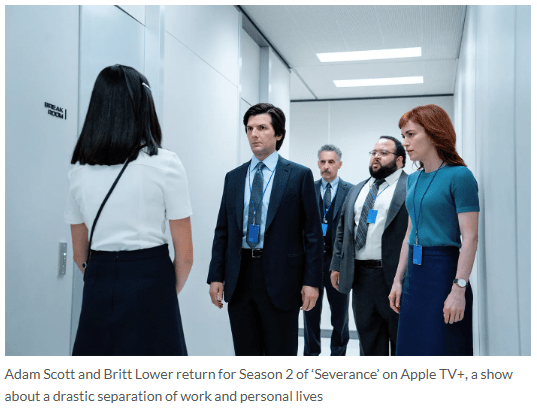
This year’s Emmys were filled with winners like Severance, The Pitt, and The Studio that thrived by dramatizing toxic, chaotic jobs.
“Work has never been weirder,” another WSJ article observed—bosses in “Survivor mode,” AI as quirky colleagues, and white-collar drudgery spun into unsettling science fiction.
It’s telling that we now consume toxic work culture as comfort TV. Just as the crowds once cheered horses being whipped down the stretch, we’re entertained by workers pushed to absurd extremes. But what’s celebrated on screen is corrosive in real life.
A founder who treats burnout as content is betting on a spectacle, not a sustainable culture.
Burnout Doesn’t Stay in the Break Room
Burnout isn’t just a “culture issue.” It shows up everywhere in the business:
- Product: Exhausted teams ship sloppy code and miss deadlines.
- Sales: Overworked reps underperform and churn—especially if you hire for “poor, hungry, and desperate.”
- Investors: Attrition and fatigue spook funders—culture risk = execution risk.
- Hiring: 90-hour weeks repel top talent and attract desperation.
- Founders: Sleep-deprived leaders make reckless calls that sink companies.
The problem is, this spectacle comes at a cost—and the numbers prove it.
The Data Behind the Burnout
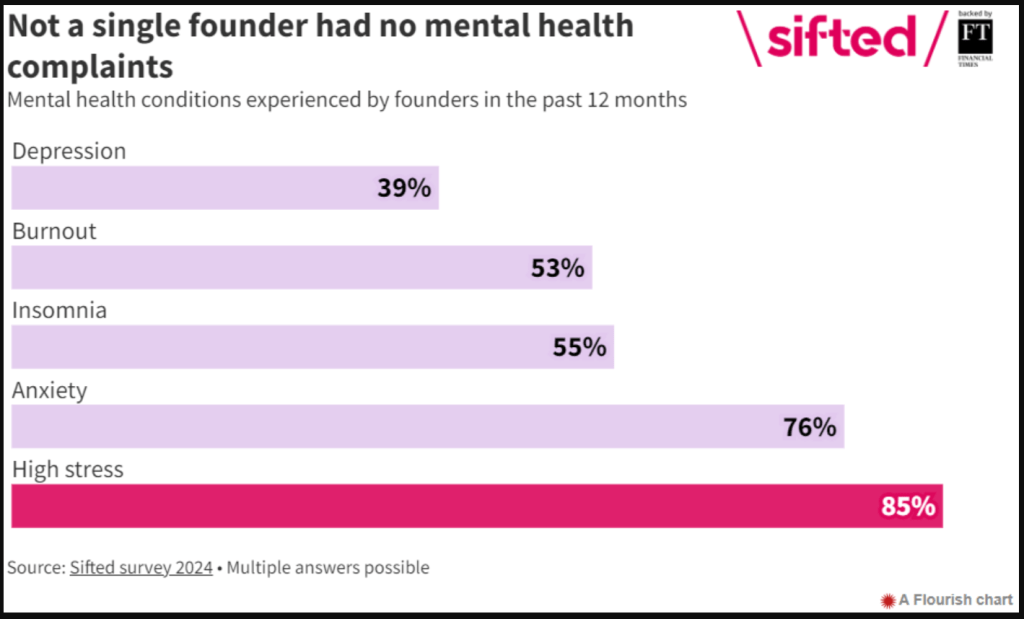
If you want proof that hustle culture is a dead-end, look at the numbers.
A 2024 Sifted/Financial Times survey found:
- 85% of founders report high stress
- 76% report anxiety
- 55% struggle with insomnia
- 53% have experienced burnout
- 39% live with depression
Not a single founder surveyed reported being free of mental health complaints.
This is the reality hiding behind the WSJ’s “hardcore” narrative. When founders brag about 92-hour weeks, pod living, and coffin-like sleep setups, they’re not inspiring—they’re feeding this crisis.
Zoox: When Ambition Tests Culture

Zoox, Amazon’s robotaxi startup, is pushing rapidly: deploying autonomous vehicles, scaling up production, and launching a robotaxi service in Las Vegas. But internal feedback from employees paints a different picture — “siloed communication, unclear expectations,” a “tumultuous environment with high turnover,” and “burnout prevalent on all teams.”
And because Zoox’s product operates on public roads, the stakes aren’t theoretical. Safety, reliability, trust — these aren’t optional. When you scale fast but neglect clarity and care, those cracks eventually matter.
It’s a reminder that no amount of horsepower matters without a jockey who knows when to push, when to hold back, and how to keep the rhythm alive.
The Jockey–Horse Bond: Power Meets Guidance

A racehorse is raw power.
But horsepower without guidance is wasted. The jockey provides rhythm, restraint, and release—knowing when to hold back and when to surge. The best jockeys develop an almost psychic bond with their horses, sensing every twitch, knowing when to push and when to trust.
Startups, mirror this dynamic. Talent is your horsepower. Culture is the synchronization mechanism that turns that power into sustained momentum. If that last line sounded too fancy, trust your instincts.
And to be clear—when I say culture, I’m not talking about your employees. I’m talking about the shared values, beliefs, behaviors, and attitudes that define how decisions are made within a company. That’s what determines whether the horse runs in rhythm or stumbles on the track.
Here’s the truth: speed without culture is just chaos on fast-forward.
🥊 Pushback & Rebuttals
| Pushback | Rebuttal |
|---|---|
| “You have to be hardcore. Everyone else is working 100-hour weeks.” | History disagrees. The dot-com crash was littered with founders who “slept under desks.” Theranos and FTX sprinted straight into collapse. Obsession isn’t strategy; it’s vanity. |
| “We’re young, we can outwork everyone.” | Marty Kausas skipped vacations, bragged about stress. Nico Laqua gave employees mattresses to sleep at work. That’s not youth—it’s dysfunction. Tired teams don’t outwork anyone. They collapse. |
| “Investors love intensity.” | Investors love returns. When attrition spikes or the press is filled with pod-living coffin quotes, confidence evaporates. Culture risk = execution risk. |
History has always punished those who sprint without strategy—whether on the battlefield, in the wild, or in the boardroom
For all of you World War II nerds out there, Blitzkrieg dazzled early too—but without supply lines, it collapsed. Cheetahs sprint fastest, but it’s the wolves who endure. Startups that confuse speed for strategy repeat the same mistake.
Solutions: How Founders Can Pace the Race
Culture isn’t abstract—it’s tactical. Here’s how to win without breaking your horse:
| Timeframe | Action Steps |
|---|---|
| Quick Wins (this week) | • Name your role as jockey—who sets pace and alignment? • Do a “track check”: ask “What’s slowing us down?” Fix one thing now. • Scan for burnout—adjust workloads before collapse sets in. |
| Short-Term Moves (90 days) | • Set pacing cycles—not every quarter should be a sprint. • Rebuild trust signals: clarify decision-making and feedback loops. • Audit for culture drift: compare founding values with today’s reality and close one gap. |
| Long-Term Play (12+ months) | • Train managers as jockeys—culture scales through middle leadership. • Institutionalize resilience: build rituals (AMAs, retros, offsites) that protect the horse. • Future-proof the track: markets shift, horses stumble, adaptive cultures endure. |
The Pipeline Problem: No Juniors, No Horses
There’s another way burnout shows up: starving the next generation.
Crunchbase News came out with a recent article this month titled, “The AI vs. Junior Talent Dilemma“. It talked about replacing junior hires with AI feels efficient in the short term but is strategically reckless. No juniors today means no leaders tomorrow. AI can crunch numbers, but it doesn’t absorb culture, doesn’t sit in customer calls, and doesn’t learn the instincts that come from lived experience.
And here’s the real enchilada: when founders burn out their teams while skipping junior hires, they double the risk. They exhaust today’s horsepower and fail to train tomorrow’s. In horse racing terms, you can’t run your best horses into the ground while refusing to raise new foals. That’s not efficiency—it’s a death spiral.
Enduring companies don’t just pace their horses, they develop their stables. They invest in people early, protect them from burnout, and grow a culture that can sustain the next lap.
And here’s what founders forget: a single horse doesn’t run alone—it carries an entire ecosystem with it.
One Horse, Many Lives
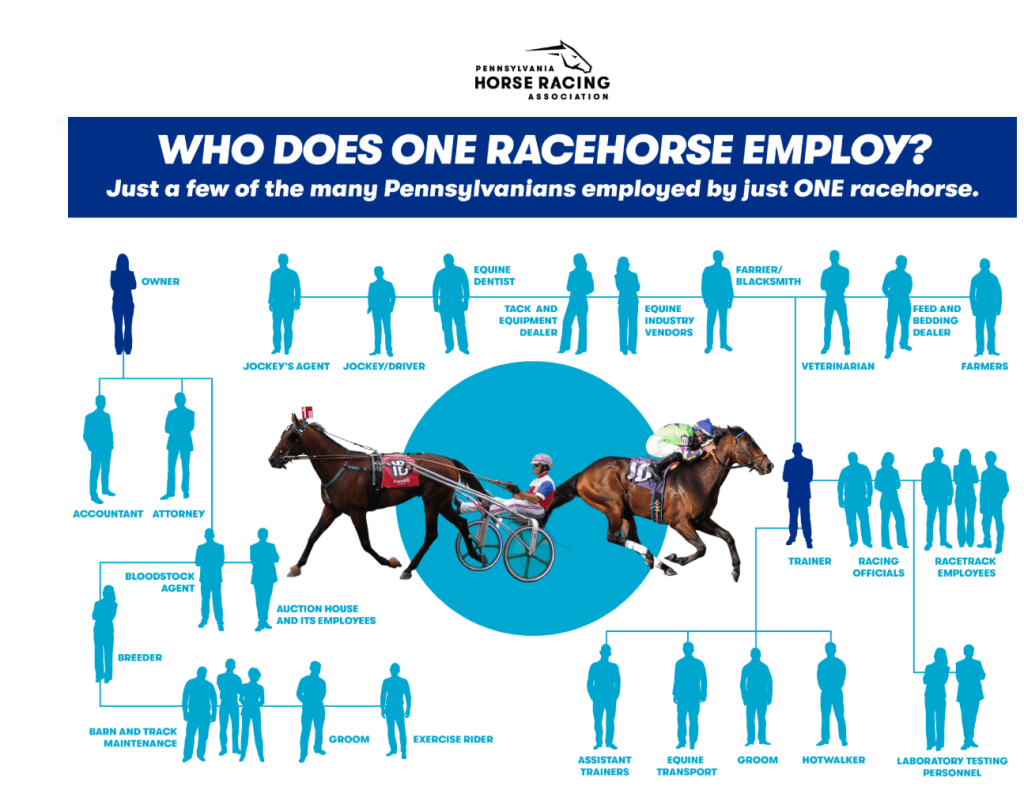
The Pennsylvania Horse Racing Association points out that a single racehorse employs dozens of people—trainers, vets, jockeys, grooms, blacksmiths, even feed dealers and transport crews. The horse doesn’t just run alone; an entire ecosystem depends on its health and performance.
The same is true for startups. Your culture—the horse—doesn’t just affect employees inside the company. It ripples outward:
- Investors rely on it to protect their capital.
- Customers feel it in product quality and service.
- Communities see it in how you hire, grow, and operate.
- Partners trust it when they stake their reputations on you.
👉 When founders burn out their culture, they’re not just breaking their horse—they’re destabilizing the entire ecosystem around them.
🏁 Final Lap
The WSJ profile I mentioned at the beginning wants you to believe these founders are admirable. They’re not. They’re symptoms of a society that mistakes burnout for brilliance.
Founders: you’re not the horse. You’re the jockey. Your job isn’t to prove you can suffer more than the next person—it’s to steward your company’s culture so it can actually finish the race.
The winners of this AI moment won’t be the ones glorifying exhaustion in the WSJ. They’ll be the ones who pace their horses, protect their people, and build companies that last.
I only remember two things about the horse race that day at Santa Anita: the silence, and walking back to the car. It felt like forever to get back to our van, but I remember how excited my brothers and I were to have been there—and how badly we wanted to come back the next weekend. We didn’t want to return to see the fastest horse, but because we witnessed the weight of the race itself.
Founders, burnout may get you attention in the short term, but it never leaves people wanting to come back for the next race. What are you doing today to build a culture that endures beyond the sprint?
Questions for Founders & VCs
- If your culture collapsed tomorrow, would your product survive the week?
- Are you pacing your team—or just daring them to break before you do?
- What would happen if your investors measured endurance instead of intensity?
- For VCs, If culture risk = execution risk, why are you still rewarding founders who brag about 90-hour weeks instead of the ones who can finish the race?

Article was read & written by John-Miguel Mitchell who is the Founder and Lead Consultant at Ekipo LLC. If you’d like to learn more about how to design and build out the ideal workplace culture for your business, email him at jmitchell@joinekipo.com.
Liked the blog? Click on the subscribe button below to get new content delivered directly to your inbox every Thursday.
 Ekipo
Ekipo 