
Read & written by John-Miguel Mitchell
Big Consulting Is Old School. Labor Day Reminds VCs Why.
This Labor Day, while most people were celebrating work (or not), I reflected on how just a couple of weeks ago, one of the world’s largest consulting firms gave VCs a brutal reminder: credibility is fragile — and when it cracks, portfolios pay the price.
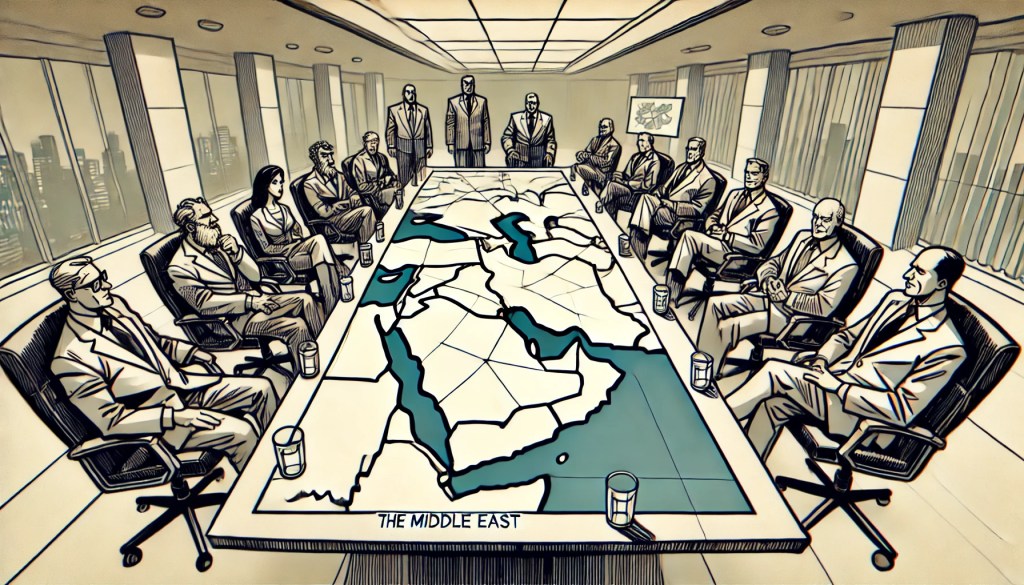
Boston Consulting Group’s Gaza fiasco (Project Aurora) wasn’t just a consulting blunder. It was a case study in what happens when outdated firms apply cookie-cutter models to complex realities. They modeled the “relocation” of half a million Palestinians, projecting $9,000 per person. per person. On paper, it was a model. In practice, it was a reputational dumpster fire.
- Employees revolted.
- Partners were fired.
- NGOs cut ties.
- Lawmakers demanded answers.
- Even the CEO had to come out and make an apology.
Whether you agree with that or not is beside the point. The perception alone was devastating. And perception, in our world, is portfolio risk.
Big consulting firms like BCG are outdated—too slow and too generic to effectively manage venture portfolios. Would you hire BCG as a VC after an experience like this? As a founder, how would you feel about trusting a large consulting firm to create a culture deck template that was probably already used by another company? In today’s market, where cultural issues can quickly hurt valuation, VCs need flexible, engaged partners who create cultural discipline as a true valuation shield.
Why This Matters for VCs

Big consulting will survive scandals like this. They’re too big to fail. But your portfolio companies? They’re not.
A Fortune 500 can absorb reputational hits. A Series B company cannot. One headline, one whistleblower, one founder misstep — and you’re facing LP calls, down-round contagion, and credibility loss across your fund.
That’s why this moment matters: reputation is the hidden KPI. And when it tanks, valuation tanks with it.
Why Old Consulting Can’t Keep Up
The last five years have rewritten the rules of work, yet big firms still operate like it’s 1999.
- Built for predictable careers, not fluid workplaces.
- Centralized power, not distributed teams.
- PR band-aids, not cultural discipline.
- Fortune 500 timelines, not startup velocity.
They are slow, reactive, and dangerously antiquated. And for VCs, relying on them isn’t just misaligned — it’s reckless.
Worse still, culture debt is more expensive than financial debt. You can refinance a loan. You can’t refinance a scandal once employees walk, customers churn, and LPs question your governance.
The Myths of Big Consulting — and Why They Fail Portfolios
Myth 1: “We have scale and resources.”
Truth: Scale without adaptability is dead weight. Startups need embedded discipline at founder speed.
Myth 2: “We’ve advised Fortune 500s for decades.”
Truth: Exactly. They’re built for Exxon and GE, not 50-person startups where one scandal can nuke valuation.
Myth 3: “We already cover culture and ESG.”
Truth: ESG decks aren’t cultural infrastructure. Culture isn’t a glossy PDF—it’s baked into decision rights, incentives, and governance.
Myth 4: “We handle compliance.”
Truth: Compliance keeps you legal. Credibility is capital. Without it, LPs don’t care about reports—they care about trust.
Myth 5: “Our frameworks are proven.”
Truth: Proven is code for stale. Work has changed more in 5 years than 50. Discipline scales. Slogans don’t.
Myth 6: “We protect reputations.”
Truth: PR after the fact is lipstick on a corpse. Once credibility is gone, so are your multiples.
Myth 7: “Startups can’t afford boutique advisors.”
Truth: They can’t afford down-round contagion. A $50k scan is pocket change compared to an $800k attrition bill and a $20M haircut.
Ekipo’s Edge: The Valuation Shield

Every VC portfolio needs a valuation shield.
That shield isn’t a PR firm on retainer. It isn’t a 200-slide deck.
It’s cultural discipline: the guardrails that keep talent, investors, and markets aligned when one company stumbles.
That’s what Ekipo builds.
- Adaptive – flexing to the stage and pace of your companies.
- Embedded – working alongside founders and boards, not parachuting in.
- Outcome-driven – treating credibility like capital, because it is.
We don’t sell decks. We install systems.
We don’t patch scandals. We prevent them.
Because resilient companies earn resilient returns.
Practical Solutions: Portfolio Discipline Over Decks
Big consulting reacts after the crisis. Ekipo builds resilience before it. Here’s what that looks like in practice:
Quick Wins (30–90 Days)
- Red/Yellow/Green Audit of Top Holdings: Treat culture risk like liquidity risk.
- Anonymous Founder Soundings: Spot governance gaps, exec mis-hires, and compliance blind spots before they metastasize.
- Board-Level Scenario Drill: Run a fire drill: harassment case at Series B, or a whistleblower leak pre-IPO. Watch who freezes and where controls break down.
Short-Term (6–12 Months)
- Culture in IC/Diligence: Hard metrics—attrition, Glassdoor patterns, compliance staffing, HR/finance turnover.
- Quarterly Reviews with Teeth: Attrition, regrettable loss, time-to-hire, governance maturity—tracked alongside burn and runway.
- Pre-IPO/M&A Stress Test: Scrub reputational risk before bankers or acquirers do.
Long-Term (Multi-Year)
- Credibility Dashboard for LPs: IRR plus reputational risk status by company. A single yellow flag is manageable. Three is contagion.
- Governance Gatekeeping: Require decision rights, escalation policies, and crisis comms before Series C.
- Embed Discipline as Infrastructure: Just like GAAP became non-negotiable, culture audits and governance scans should be baseline for capital.
Because culture debt is more expensive than financial debt—and LPs will punish both.
Labor Day Reminder: The Future of Work
Labor Day isn’t just about barbecues—it’s about reflecting on the dignity of work. For founders and their investors, that dignity isn’t sentimental—it’s financial. It drives retention, investor trust, and exit velocity.
- The future of work demands consulting that adapts.
- That embeds.
- That treats culture as infrastructure, not as an afterthought.
Closing Punch
BCG’s Gaza scandal isn’t just an embarrassing misstep. It’s proof that big firms like BCG aren’t built for startups — and they’re not built for the future of workplace culture.
For VCs, the takeaway is clear: choosing the wrong advisory partner isn’t a neutral decision. It’s portfolio malpractice.
- Big consulting is stuck in the past.
- Ekipo was built for what comes next.
👉 When your portfolio faces its culture-defining moment, do you want a relic with old playbooks—or a partner who built your valuation shield before the crisis hit?
Because in today’s markets, perception isn’t just optics. Perception is portfolio risk.
Questions for VC Firms
- Which company in your portfolio would trigger LP panic if its culture hit the headlines tomorrow?
- Are you tracking culture debt with the same rigor you track burn, runway, and ARR?
- When the crisis comes—and it will—do you want a glossy deck, or a valuation shield?

Article was read & written by John-Miguel Mitchell who is the Founder and Lead Consultant at Ekipo LLC. If you’d like to learn more about how to design and build out the ideal workplace culture for your business, email him at jmitchell@joinekipo.com.
Liked the blog? Click on the subscribe button below to get new content delivered directly to your inbox every Thursday.
 Ekipo
Ekipo 