

Zigging While the Egg Industry Zags
I love eggs.
Not exactly a shocking confession. But recently, my 13-year-old son—who’s developed a habit for cooking—asked me to pick some up from the store. As I reached for my keys, he stopped me: “Dad, make sure they’re Vital Farms.”
I laughed at first. Eggs are eggs, right? Why be so specific? But standing in the grocery aisle, I noticed Vital Farms was noticeably pricier than the store brand. My first thought: Why pay more for the same thing?
That question sent me digging. And what I found surprised me: eggs aren’t just eggs. Vital Farms wasn’t selling a commodity—they were selling culture. And just to be clear: I’m writing this out of my own free will. Vital Farms isn’t paying me to say any of this. I just think their story has something powerful to teach startup founders.
Crack open a carton of Vital Farms eggs and you’ll taste something beyond freshness—you’ll taste a culture with a backbone. While most of the egg industry doubled down on the same tired playbook—cost-cut, cage-up, commoditize—Vital Farms zigged. And they didn’t just zig—they redefined the entire aisle.
The lesson for founders? Be like Vital Farms. When the world zags, culture-powered companies zig so hard they tilt the whole playing field.
A Brief History of a Broken Industry
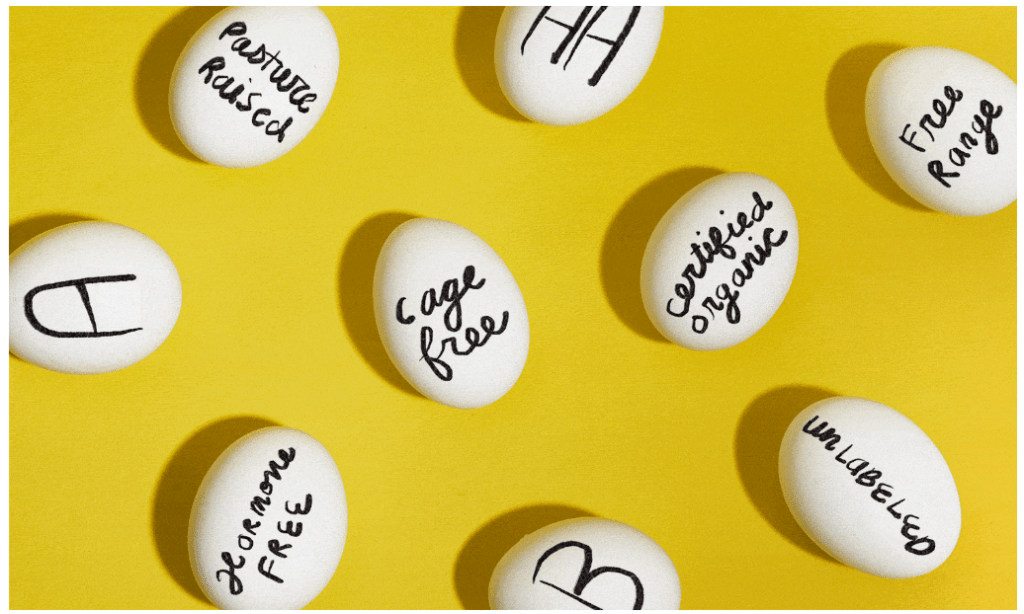
For most of the 20th century, the egg industry was built on a toxic playbook:
- Maximize production at all costs. Tens of thousands of hens crammed into battery cages the size of filing drawers.
- Erase the farmer. Consolidation wiped out small farms; growers were forced into one-sided contracts with no bargaining power.
- Mislead the consumer. Labels like “fresh,” “natural,” or even “cage-free” became marketing wallpaper—hiding inhumane, extractive practices.
By the 1990s, eggs were the ultimate commodity: cheap, standardized, and ethically bankrupt.
Vital Farms Changed the Mindset of Work
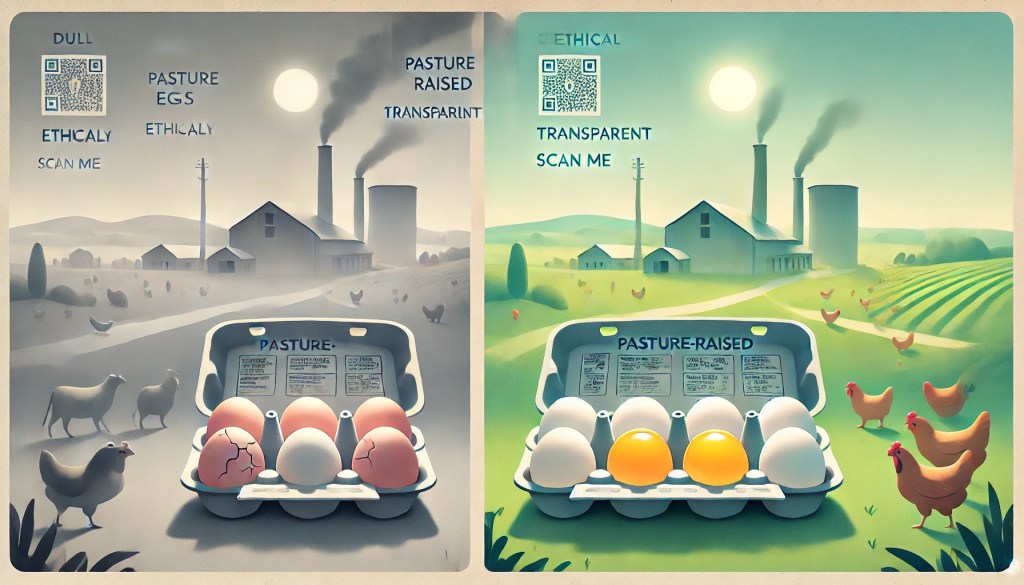
When Vital Farms launched in 2007, they didn’t have scale, lobbying power, or deep pockets. What they had was conviction: treat animals better, treat farmers fairly, and treat consumers like adults.
- From exploitation to partnership. Farmers became collaborators, not cogs.
- From confinement to dignity. Hens weren’t machines—they were given space to roam.
- From opacity to transparency. Farm codes let consumers trace eggs back to their origin.
Founder parallel: You may not be raising hens, but you are raising trust. Replace farmer with engineer, hen with employee, consumer with customer—and the lesson is identical: dignity, fairness, and transparency aren’t nice-to-haves, they’re business strategy.
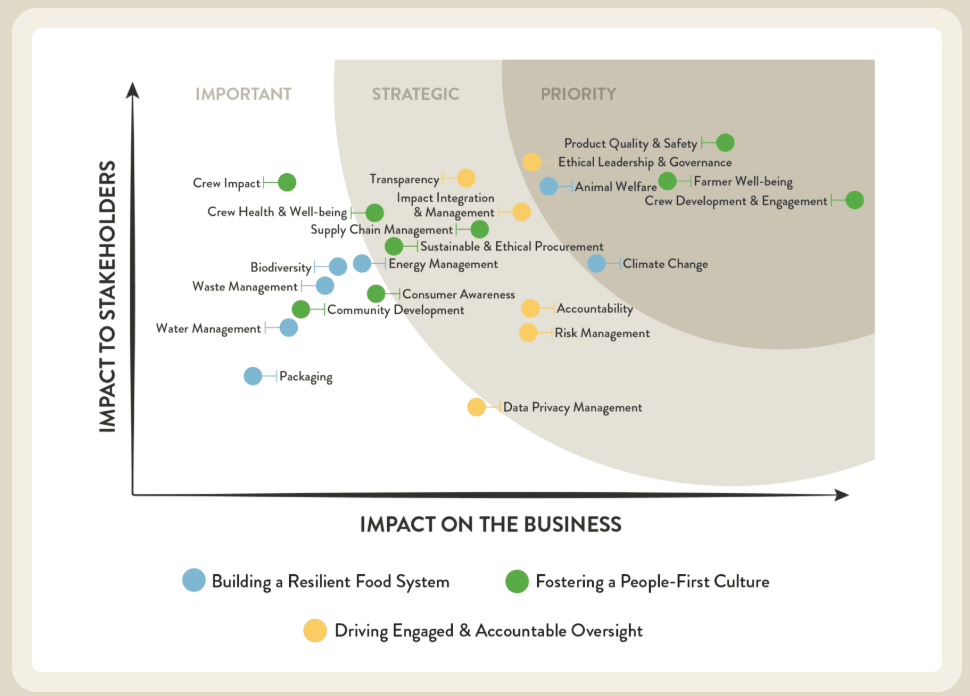
Vital Farms didn’t just talk about culture—it operationalized it. This graphic from the company’s report shows exactly how they map cultural commitments to both stakeholder trust and business outcomes. Notice what lands in the ‘priority’ quadrant: product quality, crew development, farmer well-being, and ethical leadership. In other words, the people and values behind the eggs drive the business forward.
Rebuttal: Isn’t Culture Just Fluff?
Skeptics will argue: “Culture doesn’t pay the bills. Just build product and grow.”
But here’s why founders should reject that thinking:
- Resilience beats efficiency. Vital Farms survived “eggflation” and avian flu because of farmer loyalty. What will your team do in a downturn—stay loyal, or churn?
- Scaling with integrity matters. Even as they built a second LEED-certified “Egg Central Station,” Vital Farms didn’t abandon its values. Will your culture survive Series B?
- Trust is pricing power. Consumers pay premiums for brands they believe in. Investors pay premiums for founders they trust.
Culture isn’t soft. For founders, it’s the single most underpriced form of resilience.
Startup Parallels: Zigging Across Sectors
- Domino’s Pizza: Publicly admitted its pizza was terrible, reinvented the recipe, and embraced transparency—leading to a 90x stock surge from 2010-2018.
- Etsy vs. eBay: Zigged into authenticity and craft when eBay zagged into mass scale. Now a global marketplace.
- Eve Sleep (UK): Sold “better mornings” instead of mattress specs → reframed the entire category.
Lesson: Founders who zig with culture often outlast incumbents who zag with efficiency.
The SaaS Parallel: Is SaaS Dead in the Age of AI?
Today’s SaaS incumbents look a lot like yesterday’s egg giants: slow, defensive, stuck in commodity mode. AI-native startups are Vital Farms—they’re zigging.
- Incumbents manage workflows. AI replaces them.
- Incumbents unbundled. AI is rebundling.
- Incumbents face margin strain. AI’s usage-based models disrupt their economics.
Founder takeaway: Just like Vital Farms, your zig won’t be “cheaper and faster.” It will be cultural—building trust, transparency, and resilience into the very DNA of your AI-first startup.
Quick Wins & Long-Term Plays for Founders
| Horizon | Action | Impact |
|---|---|---|
| Next Week | Share a behind-the-scenes story of your product journey (warts and all). | Authenticity builds early trust. |
| Start a “Values in Action” ritual with your team. | Reinforces alignment when you’re still small. | |
| 3–6 Months | Make your “traceability moment.” Show who built the MVP, signed the first deal, or designed v1. | Humanizes your company and builds investor/customer confidence. |
| Run a culture check-in and publish a takeaway. | Signals learning + leadership maturity. | |
| 1–2 Years | Publish a lightweight culture/impact report alongside financial updates. | Proves culture → performance to investors. |
| Codify your values into a founder framework others can’t ignore. | Becomes your moat as you scale. |
Culture Is the Compound Interest of Startups
If my son hadn’t pointed out Vital Farms, I’d still be buying the cheapest eggs on the shelf. But if an egg company that wins the loyalty of a 13-year-old can inspire that kind of trust, imagine the compounding effect on its employees, customers, and investors.
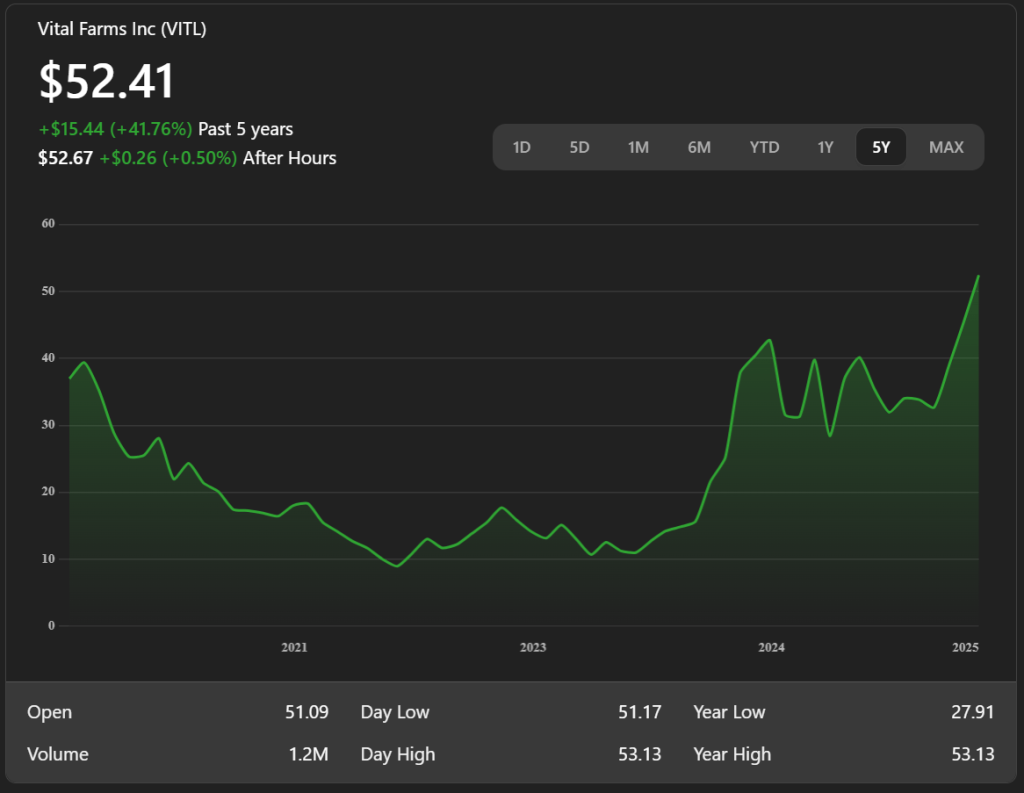
While Wall Street obsessed over Nvidia earnings today, Vital Farms reminded us: down to $7.89 in 2022, now up 369% off its lows and still 42% higher over five years.
Culture doesn’t just feed trust — it fuels returns. If Wall Street is already pricing culture in, why aren’t you?
That’s the lesson for startup founders: culture isn’t a side project — it’s the market advantage.
Questions for Founders & VCs
- If Vital Farms could turn hens, farmers, and transparency into a competitive moat—what overlooked part of your culture could become your market advantage?
- Are you optimizing for short-term efficiency like the old egg industry, or building long-term resilience like Vital Farms?
- If AI is zigging the way Vital Farms did, are you prepared to lead with values—or will you be the incumbent forced to react too late?
- When your investors, employees, or customers scan the “QR code” of your company, will they find integrity—or a commodity in disguise?

Article was read & written by John-Miguel Mitchell who is the Founder and Lead Consultant at Ekipo LLC. If you’d like to learn more about how to design and build out the ideal workplace culture for your business, email him at jmitchell@joinekipo.com.
Liked the blog? Click on the subscribe button below to get new content delivered directly to your inbox every Thursday.
 Ekipo
Ekipo 