
Read & Written by John-Miguel Mitchell

Forgive me if I use another Game of Thrones reference (I leaned on one last week too), but it’s the best visual of “security personnel” I can think of right now.
In the series, Daenerys Targaryen commanded the Unsullied—thousands of elite warriors trained from childhood to be utterly loyal, fearless, and unquestioning. They marched in lockstep, shields raised, a wall of spears between her and any threat.
Tech CEOs don’t have the Unsullied. They have ex-Secret Service agents, armored SUVs, and ballooning line items for “executive protection.” The effect is the same: surround yourself with soldiers and hope that shields will substitute for trust.
But here’s the difference: the Unsullied were bred for loyalty. Your employees, customers, and communities are not. If you need to wall yourself off behind a modern army, it’s not a sign of strength—it’s proof that you’ve already lost the battle of trust and reputation.
The Financial Times reports that in 2024, ten major tech companies—including Meta, Alphabet, Nvidia, Amazon, and Palantir—spent over $45 million on personal security for their top executives.
Mark Zuckerberg alone cost Meta more than $27 million last year for protection. Amazon has paid at least $1.6 million annually to protect Jeff Bezos. Nvidia more than doubled Jensen Huang’s security budget to $3.5 million. Palantir’s Alex Karp now moves with a 24/7 detail.
On the surface, this looks like smart risk management. In reality, it’s something darker: a tax on broken trust.
History Shows Us: Reputation Is the Real Loss
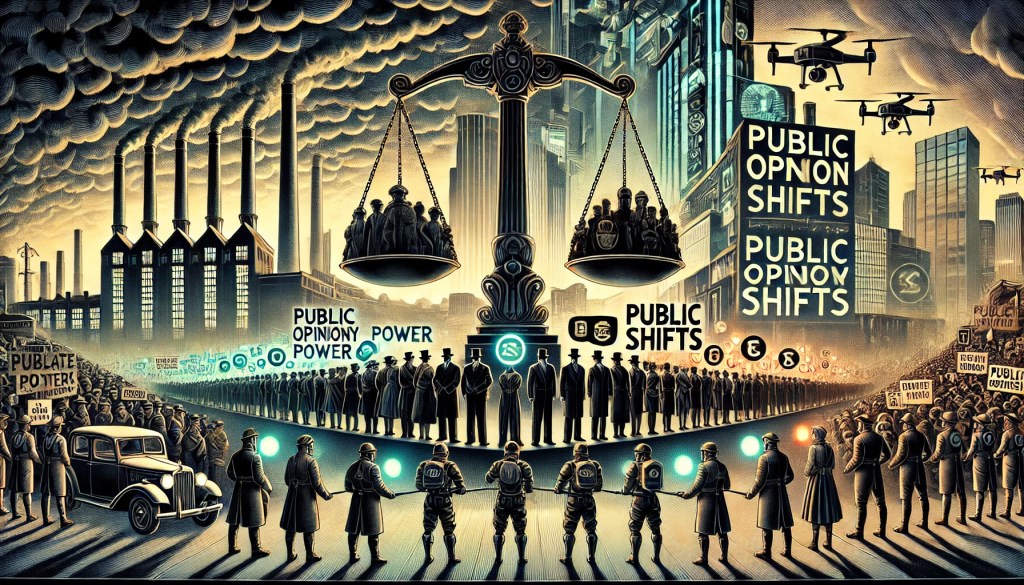
We’ve seen this movie before. Leaders who armored up instead of owning up never won the long game:
- Robber Barons of the Gilded Age – Railroad magnates and steel tycoons built private militias. Instead of securing their empire, they fueled violent strikes and earned a century-long reputation as ruthless profiteers.
- Ford Motor Company’s Security Force – Henry Ford’s private police beat union organizers at the “Battle of the Overpass” in 1937. It didn’t intimidate the public—it humiliated Ford’s brand for decades.
- Mining & Textile Executives – Pinkertons and strikebreakers were hired to silence dissent. Instead, they supercharged union growth and government scrutiny.
The lesson is timeless: bodyguards may shield the executive, but they spotlight a failing reputation.
What Made This Possible?
Three forces collided to make executive security budgets explode:
- Ego-Driven Leadership
The cult of the founder/CEO has grown so large that leaders are no longer just operators—they’re public symbols. When leaders brand themselves as larger-than-life, hostility finds them just as easily as admiration. - Cultural Drift Inside Companies
Employees who feel silenced or mistreated don’t quietly leave anymore—they go public. They leak memos, fuel social media firestorms, and shift the narrative. Internal distrust becomes external hostility. - The Age of Scrutiny
Politics, media, and online platforms have collapsed the walls between the boardroom and the street. Executives are now judged in real time by millions. The backlash isn’t just about the company anymore—it’s personal.
Security budgets didn’t balloon because threats are “new.” They ballooned because leadership models failed to adapt to this new reality.
Security Budgets Are the New Vanity Metric
Here’s where founders and VCs get it wrong:
- VC Blind Spot: VCs often celebrate founders who are “high-profile” enough to need security, as if visibility is validation. But let’s be honest—if you’re investing in founders who spend more on guards than on people, you’re not betting on vision—you’re betting on fear.
- Leadership Narrative Flip: These security budgets aren’t signs of power. They’re the new vanity metric. They don’t signal success—they signal disconnection.
And the data backs it up:
- From 2020 to 2024, there was a 73.5% jump in tech companies offering executive security benefits.
- Executives aren’t just insulating from physical threats—they’re reacting to political scrutiny and online hostility.
When fear dictates policy, trust evaporates.
Founders: The Startup Version of Bodyguards
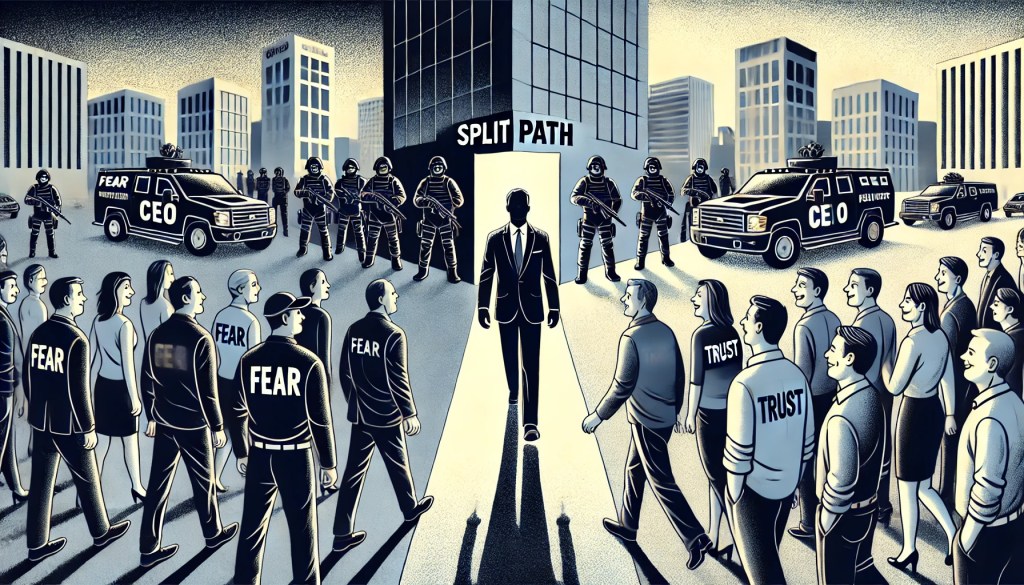
You don’t have Zuckerberg’s budget. You don’t have Nvidia’s scale. If you lose trust, you don’t get the luxury of buying it back with a 24/7 detail.
Instead, your “security spend” shows up in softer, hidden line items:
- Recruiter fees to replace the engineers who quit because leadership stopped listening.
- Churn from customers who no longer believe your promises.
- Investors who stop taking your calls because they don’t trust the numbers.
You may not be paying millions in cash, but you’re paying in turnover, distrust, and missed opportunities.
The Graph: Systemic, Not Isolated
And it’s not just Big Tech. Across the S&P 500, executive security perks are skyrocketing—up six points in 2024 alone:
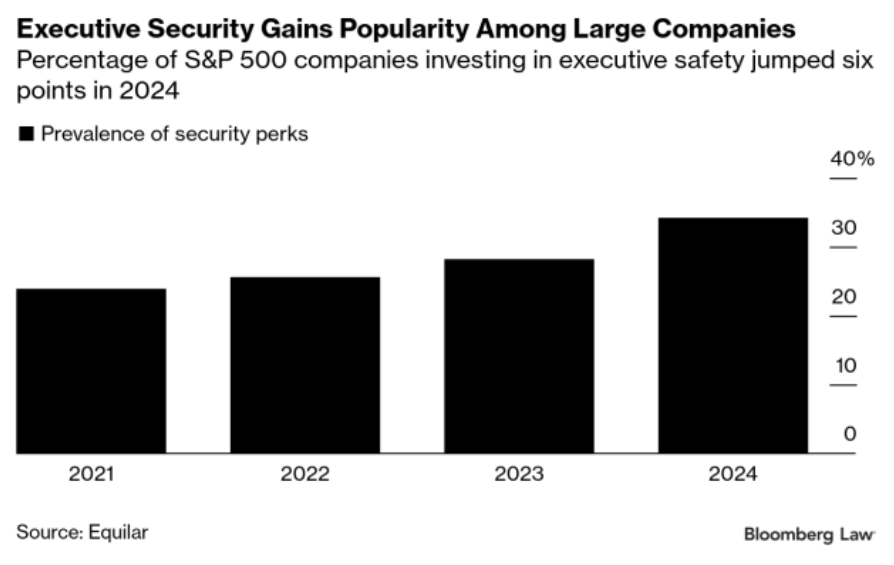
For Meta or Amazon, that’s a rounding error. For a startup? That’s the equivalent of burning six months of runway on preventable churn.
The numbers may look different, but the drain is the same.
Pushback from Founders: “But Threats Are Real”
Some founders might argue:
- “Threats are real, this is just smart protection.”
True—but history shows that doubling down on walls doesn’t fix the conditions that create hostility. Reputation isn’t restored by guards; it’s earned by leadership. - “Security is a necessity, not a failure.”
Sure, some baseline protection is common sense. But when security spend outpaces investment in people, culture, or trust—reputation takes the hit. You may buy time, but you can’t buy back credibility.
And let’s be real: your biggest threats aren’t stalkers at the office. They’re employees rage-quitting on Glassdoor, customers blasting you on X, and journalists publishing exposés. No bodyguard can intercept those.
What Happens Next?
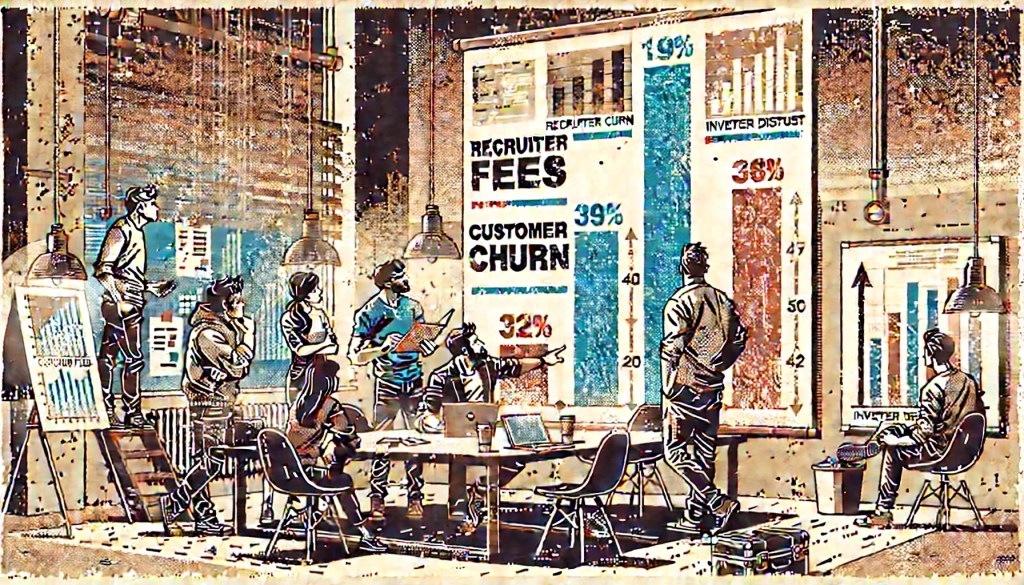
If the trajectory continues, here’s the likely future:
- Security as Standard Perk
Just like stock options became the 2000s perk, security will become the 2020s perk for top executives. It’ll be normalized, even expected, at the expense of deeper cultural repair. - Runway Drain for Startups
In startups, the “security tax” won’t show up as bodyguards—it’ll show up in preventable churn, higher recruiting costs, PR crises, and investors questioning founder judgment. A hidden but lethal drag on runway. - Regulators & Public Backlash
Just as Pinkerton violence in the early 1900s accelerated labor laws, public disgust with “CEO fortresses” could trigger political or regulatory pressure on corporations. - Trust as the Real Competitive Advantage
The companies that win won’t be the ones with the most armored SUVs. They’ll be the ones with cultures strong enough that leaders can walk into a town hall, a conference, or a factory floor without fear.
The Choice Ahead
Founders and VCs have a decision to make:
- Keep scaling fear, and watch budgets, reputations, and valuations erode.
- Or scale trust, and build the kind of resilient organizations that don’t need guards at the gate.
History, data, and common sense all point in the same direction: once you’re budgeting for bodyguards, you’ve already lost.
Questions for Founders & VCs
- For Founders: If your employees trust you less each quarter, how long before your investors stop trusting you too?
- For VCs: Are you funding leaders who can scale culture—or leaders who will eventually need to scale bodyguards?
- For Founders: Would you rather spend your next million on recruiting and retention—or on repairing a reputation that never should have broken?
- For Both: When you review your portfolio, do you treat trust as a core asset—on par with product-market fit, revenue, or IP?

Article was read & written by John-Miguel Mitchell who is the Founder and Lead Consultant at Ekipo LLC. If you’d like to learn more about how to design and build out the ideal workplace culture for your business, email him at jmitchell@joinekipo.com.
Liked the blog? Click on the subscribe button below to get new content delivered directly to your inbox every Thursday.
 Ekipo
Ekipo 