
Read and Written by John-Miguel Mitchell

“Move fast and break things” doesn’t work when it’s people breaking.
According to a recent TechCrunch report, SpaceX’s Starbase facility in Texas posted an injury rate in 2024 that was nearly six times higher than the space manufacturing industry average—and higher than any other SpaceX site.
Crushed limbs. Amputations. Electrocutions. Even a fatality.
We often celebrate SpaceX as a symbol of speed, grit, and boundless innovation. But behind the headlines, there’s a quieter story unfolding—a story of urgency outpacing safety, and ambition overshadowing the humans doing the building.
As someone who works with startup founders and VC-backed teams, I don’t just see a safety issue here—I see a leadership culture that’s communicating all the wrong things, even if unintentionally.
What’s happening at SpaceX’s Starbase isn’t just a safety breakdown—it’s a culture breakdown. When leaders prioritize speed at all costs, the workplace itself starts sending signals: about what’s urgent, what’s expendable, and who truly matters. Culture isn’t just what founders say in all-hands meetings—it’s what people see, feel, and navigate every day from within their workspace. From floor plans to Slack channels, from makeshift break rooms to onboarding rituals, your workspace is quietly broadcasting your values. The question is: are you aware of what it’s saying?
🚧 Safety Isn’t Just Compliance—It’s Culture
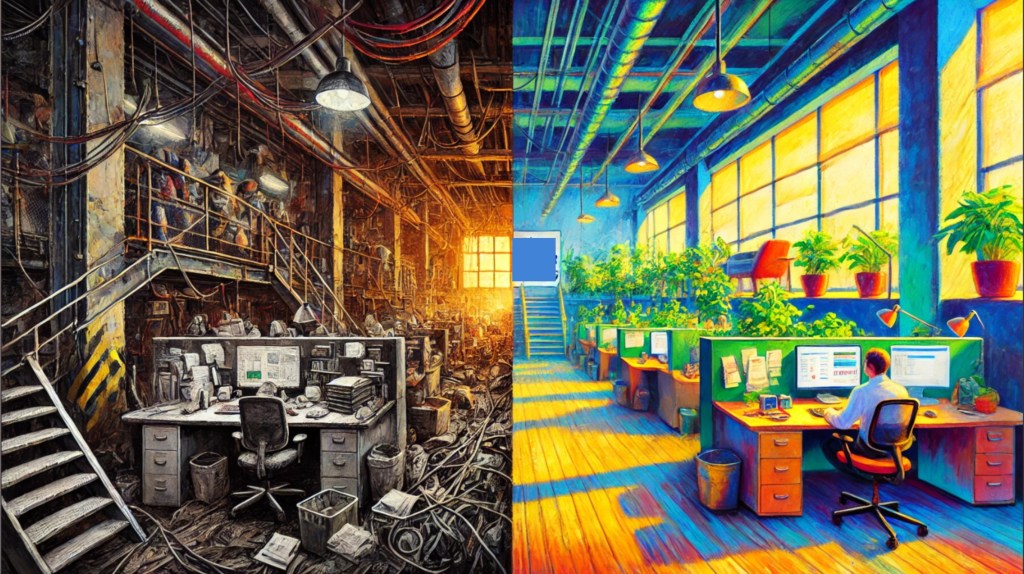
When your injury rate eclipses not just competitors like Blue Origin and ULA, but even your own internal sites (like Hawthorne), the problem isn’t the job—it’s the system around the job.
What’s being prioritized?
What’s being neglected?
What’s being signaled?
Leaders can’t claim “we value people” when their systems, structures, and decisions say otherwise. Culture is what gets revealed under pressure—and right now, Starbase is under a lot of pressure.
🧱 Culture is Physical. It’s Also Visual.

Let’s talk about visual artifacts—a key element of workplace culture that often gets overlooked.
Whether it’s a command center built out of shipping containers, a break room that looks like an afterthought, or a Slack workspace filled with chaos and no clarity—your environment is sending messages about what you value.
- A floor plan designed for speed but not safety? That says: “Your job is to keep up.”
- Makeshift workstations? That says: “Comfort and ergonomics are optional.”
- A virtual workplace with zero onboarding or collaboration rituals? That says: “We didn’t plan for you.”
Starbase workers have described tents, trailers, and rushed builds meant to optimize launch schedules—not human wellbeing. It looks like innovation. But it feels like disregard.
And that dissonance erodes trust—fast.
💻 What Are You Really Saying With Your Space?
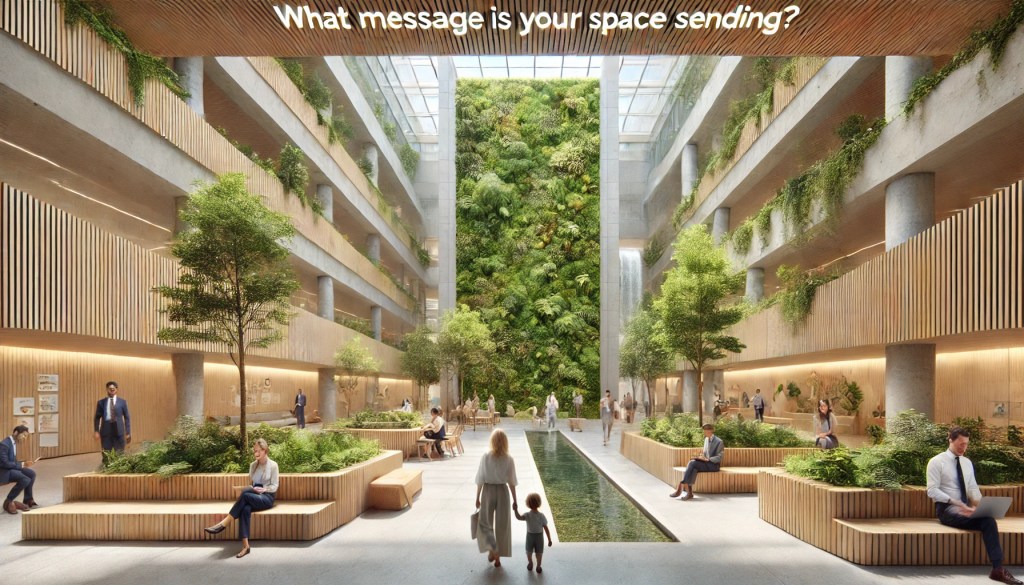
Here’s the question every founder should ask themselves:
What do you want someone to feel when they walk into your office—or log into Slack?
- Are there objects, rituals, or symbols that reinforce your mission?
- Does your layout encourage collaboration—or create silos?
- Is there anything in your environment—physical or digital—that sends the wrong message about your values?
- Have you been intentional about your space, or are you just hoping people adapt?
These aren’t “HR questions.” They’re leadership decisions—and they influence how your team shows up, speaks up, and stays.
Just this week, I took my 2-year-old to a new doctor’s office. From the outside, it looked like your standard corporate brown-brick building from the 1980s. My mind immediately went to: “Great, another cold, clinical command center.”
But as we stepped through the doors, everything changed.
They had built a stunning, light-filled atrium—lush with trees, greenery, and gentle water features. It wasn’t just decoration; it was an intentional, living invitation to pause, breathe, and feel welcome. My 10-year-old looked around and said, “Wow, this feels like a hotel. I love it.”
Here was a commercial space that, at some point in time, chose to communicate care over convenience. Not just to the patients, but to the doctors, nurses and administrative staff. It said: You matter. Your experience here matters. And that choice isn’t just aesthetic—it’s biological. Studies show that exposure to natural elements like trees, sunlight, and flowing water can lower cortisol levels, reduce mental fatigue, improve focus, and even accelerate physical healing. An atrium like this isn’t just beautiful—it’s a daily, evidence-backed investment in the wellbeing, resilience, and performance of everyone who walks through the door.
And that’s the opportunity every founder has: To use space—physical or digital—not just as a workspace, but as a strategic lever for culture.
So ask yourself: What story is your workplace telling… even when you’re not speaking?
💡 Quick Wins for Founders and Operators
Whether you’re Series A or scaling toward IPO, it’s not too early to build it right.
Let’s make your workplace say what you really mean.
Want to shift what your workplace says about your culture? Start here:
🔧 Short-Term Fixes (Next 30 Days):
- Walk the floor (or Slack) like an outsider. What’s confusing, chaotic, or unsafe?
- Add a physical or virtual “pause point”—a break area, a ritualized check-in, or even a Slack channel for decompression.
- Survey your team anonymously about whether they feel safe—physically, emotionally, and professionally.
- Audit your visual artifacts: Is your space inspiring, or just functional? Are the values you claim visible anywhere?
🏗️ Long-Term Shifts (Next 6–12 Months):
- Redesign your workplace—physical or digital—with culture in mind.
Hire someone with experience in facilities, systems design, or culture-building. Stop duct-taping your internal environment. - Create rituals that reinforce belonging and safety, not just speed and outcomes.
- Incentivize reporting and speaking up, especially around safety or burnout. Psychological safety precedes innovation.
- Embed safety metrics and workplace wellbeing into your board updates, leadership reviews, and OKRs. Culture is a performance indicator.
Final Thought: Your Workplace is Always Saying Something
The most visionary leaders aren’t the ones who push the hardest.
They’re the ones who build environments that allow others to sustain the push—safely, consistently, and with integrity.
Because the workplace isn’t just where your team works.
It’s where your culture is made visible.
If you’re not designing that space with intention, you’re still sending a message. You just might not like what it says.
Four Questions for Startup Founders and VCs:
- What do you want someone to feel the moment they enter your workplace or open your Slack?
- What physical or digital artifacts reinforce your values—and which contradict them?
- Are your systems and spaces designed for human sustainability or only speed?
- What signals are you sending about whose wellbeing matters most?

Article was written by John-Miguel Mitchell who is the Founder and Lead Consultant at Ekipo LLC. If you’d like to learn more about how to design and build out the ideal workplace culture for your business, email him at jmitchell@joinekipo.com.
Liked the blog? Click on the subscribe button below to get new content delivered directly to your inbox every Thursday.
 Ekipo
Ekipo 