
Read & written by John-Miguel Mitchell
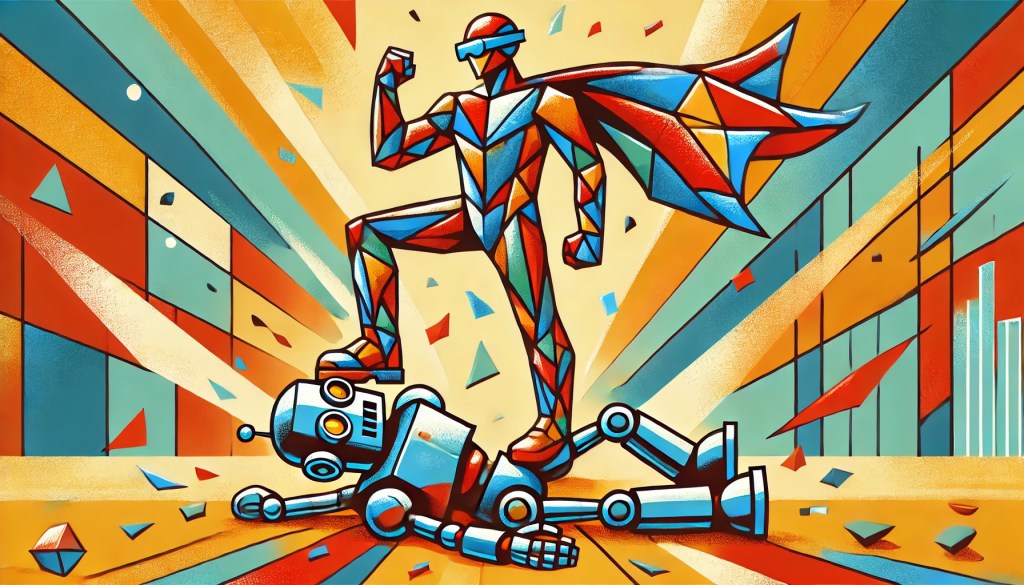
If you’re a startup founder or a VC, you’ve likely asked or heard this question before:
“Why should we pay for a workplace culture consultant when we can just Google advice or ask ChatGPT for free?”
It’s a fair question. Especially in an era where AI can crank out pitch decks, write investor updates, summarize user feedback, and even suggest your company values in seconds. Founders have never had more tools at their fingertips—so it’s easy to wonder if expert guidance is still necessary.
In a world where AI can generate company values, write HR policies, and even simulate leadership advice, it’s tempting to think that expert guidance is optional. But here’s the truth: building a resilient, high-trust team isn’t about having the right information—it’s about making the hard, human decisions that shape behavior, trust, and long-term success.
Let’s talk about why culture is still your greatest competitive advantage—and why founders and VCs ignore it at their own risk.
1. Advice is Cheap. Insight is Rare.
AI can give you a list of “10 ways to improve culture.” Google can hand you articles about radical transparency or Netflix’s freedom-responsibility framework.
But when your CTO is undermining the VP of Product in standups, when half your team has one foot out the door, or when your founding team is burned out and trust is eroding—do you really want a generic answer?
Culture consultants aren’t here to recite best practices. We’re here to help you:
- Diagnose root causes, not just symptoms
- Understand interpersonal dynamics you may be too close to see
- Design culture systems tailored to your leadership style, your team, and your growth stage
2. Yes, AI Is Disrupting Everything—But Not This
There’s no denying it: AI is upending industries at record speed. According to McKinsey, generative AI could automate activities that absorb up to 60–70% of employees’ time today. Goldman Sachs estimates that 300 million jobs globally could be affected by AI-related automation in the coming years. Fears of being replaced are no longer theoretical—they’re palpable.
From legal research to copywriting to coding, AI is moving faster than most teams can strategize around. Founders are right to worry. Investors are right to ask hard questions. But amid all this disruption, one truth is becoming clearer: The things that are hardest to automate—trust, emotional intelligence, human motivation—are becoming the most valuable assets in a startup.
And culture sits right at the center of that.

3. AI Doesn’t Know Your Cap Table, Your Drama, or Your Blind Spots
No offense to ChatGPT (and yes, we use it too), but AI doesn’t know:
- The baggage your co-founder is carrying from their last failed startup
- The subtle dynamics between your VP Sales and your Head of Customer Success
- That your Series A investor is quietly losing faith in your leadership maturity
That context matters. Culture is not plug-and-play—it’s highly contextual, emotionally loaded, and constantly evolving.
Real consultants ask hard questions. We build trust with your team. We sit in on the meetings where the subtext matters more than the slide deck. And we stay long enough to spot the patterns that are slowing you down—or setting you up to scale.
4. The Real Risk Isn’t Wasting Money—It’s Wasting Time
Startups don’t die from a lack of knowledge. They die from:
- Avoiding the uncomfortable stuff
- Letting dysfunction fester
- Hiring fast and realizing too late that no one trusts each other
You don’t bring in a workplace culture consultant because you can’t figure it out on your own. You bring us in because you’re smart enough to realize that:
- Your time is your most valuable asset
- Early culture choices compound—good or bad
- Sometimes, it takes a third party to say the thing no one on your team will say out loud
And even the most powerful companies are starting to recognize this.
📰 Just last week, OpenAI CEO Sam Altman accused Meta of trying to poach his staff with $100 million signing bonuses. Despite the eye-popping offers, he said:
“So far none of our best people have decided to take them up.”Why? Because as Altman put it, Meta isn’t seen as “a company that’s great at innovation”—and there are cultural risks in jobs that are more focused on money than on the work.
When top-tier AI talent turns down $100M checks because they don’t trust the culture, that’s your signal: culture isn’t a luxury. It’s a moat.

5. Culture Is Still a Competitive Advantage—Even in an AI World
As AI takes over more workflows, what’s left is us—our relationships, our values, our trust in one another.
But here’s the kicker: AI isn’t just accelerating output—it’s also accelerating burnout.
🕒 According to Microsoft’s 2025 Work Trend Index, employees today are trapped in an “infinite workday.”
- 40% of workers are checking emails at 6am
- The average employee receives 153 Teams messages per weekday
- 57% of meetings are booked without a calendar invite, many last-minute
- And during “core business hours,” employees are interrupted every two minutes by email, chat, or meeting alerts
That’s not productivity. That’s chaos in disguise.
The report even warns that while AI might reduce menial tasks, it’s often just freeing people up for more work, not more rest. Without a culture that protects focus, sets boundaries, and rewards sustainable pace—not performative urgency—AI becomes a tool for exhaustion, not excellence.
The companies that will win over the next decade won’t just be the ones with the best LLM integrations. They’ll be the ones where people:
- Actually want to show up every day
- Know how to work through conflict
- Feel psychologically safe enough to challenge ideas and innovate
That’s not something you can automate.
6. VCs: Stop Funding Culture Debt

To the investors reading this: You vet financial models and GTM plans. But are you underwriting leadership maturity and culture health with the same rigor?
Culture debt doesn’t show up on a cap table—but it kills just as many companies.
By the time a portfolio founder calls for help, they’re often trying to fix a culture that’s already broken. Bringing in a consultant early isn’t an indulgence—it’s an insurance policy on your investment. We all know the old phrase, “nobody needs insurance, till you you need it.”
AI Can’t Replace Human Leadership
You can Google values. You can prompt ChatGPT for meeting rituals.
But you can’t outsource the hard, human work of leading with intention.
Yes, AI can generate ideas. But culture consultants help you implement them—with clarity, urgency, and emotional intelligence.
So if you’re a founder trying to scale your team, navigate leadership tension, or just build something people want to stay part of—don’t wait until it’s broken to ask for help. Whether it’s Ekipo or another trusted partner, find someone who understands how startup culture actually works—and who can help you design it before it starts happening by default.
And if you’re wondering where to start, it might not take a “transformation”—just a culture pivot.
👉 Read why we think culture pivots are the smarter, faster move.
Because once dysfunction becomes embedded, no amount of funding or free lunches will fix it.
The Bottom Line
In a world where AI is automating everything, human leadership is your last true advantage.
Culture isn’t a vibe. It’s infrastructure.
Build it right—or you’ll spend the next funding round cleaning up the mess.
Questions for Founders & VCs to consider

For Startup Founders:
- Where in my company is dysfunction quietly compounding—and am I too close to see it clearly?
(Hint: If you’re not sure, that’s your sign.) - Am I leading culture by design, or is it unfolding by default based on stress, speed, and survival mode?
- What behaviors are being rewarded on my team right now—and are they aligned with the culture I say I want?
- For VC firms, Am I underwriting leadership maturity and culture health with the same rigor I apply to financials and go-to-market plans?
(And if not—what is that blind spot costing our portfolio?)
Article was written by John-Miguel Mitchell who is the Founder and Lead Consultant at Ekipo LLC. If you’d like to learn more about how to design and build out the ideal workplace culture for your business, email him at jmitchell@joinekipo.com.
Liked the blog? Click on the subscribe button below to get new content delivered directly to your inbox every Thursday.
 Ekipo
Ekipo 