

Who feels like we’re using the word “volatility” a lot these past few months? Are we slowly falling into a recession? Has it already arrived?
Just take a look at some the most recent economic indicators that have investors increasingly concerned about recession risks:
- Inverted yield curve: The 2-year/10-year Treasury yield inversion has persisted, historically a reliable recession predictor
- Manufacturing contraction: The ISM Manufacturing PMI remained below 50 for most of 2024, indicating contraction in the manufacturing sector
- Weakening labor market: Job growth has slowed significantly, with only 143,000 jobs added in January (average was 160,000 in 2024)
- Consumer spending pullback: Retail sales have shown volatility with several months of negative growth
- Tech sector layoffs: Major tech companies announced significant workforce reductions in mid-2024
- Commercial real estate stress: Office vacancy rates in major metros continue to hover above 20%, putting pressure on regional banks
Well, we know that in the world of startups, it’s not a question of if you’ll face a crisis (or recession for that matter), but when. Just as the market has weathered events from the 1987 Black Monday crash to the 2008 financial crisis to the COVID-19 pandemic, every startup journey includes defining moments of existential threat. These moments separate the companies that fold from those that emerge stronger. Yes, I know the previous sounds cheesy, but just bear with me for a moment as I explain.
The Inevitable Crisis: Are We Facing One Now?
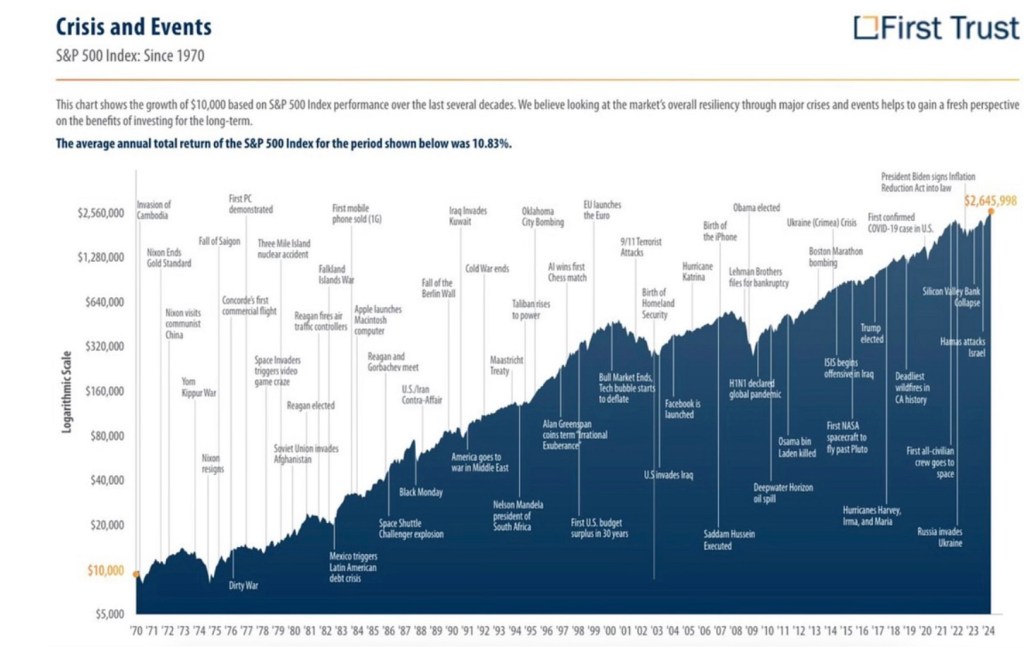
The S&P 500 chart tells a compelling story: despite wars, recessions, terrorist attacks, and global pandemics, the market has delivered a remarkable 10.83% annual return since 1970. But this long-term success masks periods of intense volatility and uncertainty—moments that mirror what founders experience on a smaller scale.
Your startup’s “Black Monday” might look like:
- A major client suddenly canceling (representing 40% of your revenue)
- A critical funding round falling through days before payroll
- A competitor launching a superior product that threatens your market position
- Unexpected regulatory changes that challenge your business model
- A co-founder departure that shakes your leadership team
When these moments arrive—and they will—the foundation you’ve built before the crisis becomes your most valuable asset.
How Culture Becomes Your Crisis Immune System

Companies with strong cultures don’t just survive crises—they use them as catalysts for growth. Here’s how you can build a culture that turns potential disasters into opportunities:
1. Establish a “Truth-First” Communication Framework
In 1987, when the market crashed 22.6% in a single day, the companies that recovered fastest were those where leadership provided transparent, honest assessments of the situation.
Culture Implementation: Create regular forums where bad news is not just permitted but encouraged. This might be a weekly “problems and solutions” meeting where team members can surface issues without fear. When a crisis hits, you’ll already have the muscle memory for honest communication. This also shows your team that you truly value their input regardless of whether it’s raining or shining on your business. Meetings shouldn’t be places were we’re only communicating the highs and not the low-it certain point this is nothing short of company malpractice. Be ready to hear the good, the bad and the ugly on where your business stands every week.
2. Cultivate Decision-Making at All Levels
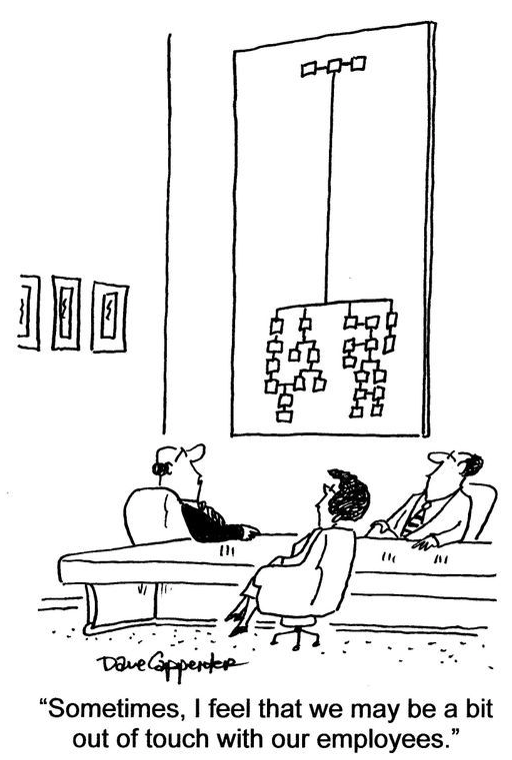
The companies that navigated the 2008 financial crisis most effectively weren’t those with the strongest CEOs, but those with the strongest teams—people throughout the organization who could make smart decisions without waiting for top-down direction.
Culture Implementation: Implement a “decision journal” practice where team members document important decisions, their reasoning, and expected outcomes. Review these collectively to reinforce good decision-making frameworks that will be crucial during crisis moments. This might sound silly for a startup, but decision journals prevent startups from losing critical knowledge when team members leave and build the collective decision-making muscles needed during economic crises.
3. Build Financial and Emotional Runway
The most resilient startups maintain both types of runway: financial resources to weather downturns and emotional capacity to handle stress without burnout.
Culture Implementation: Beyond smart cash management, institute “resilience practices” like regular retrospectives that celebrate progress even amid challenges, and team support systems that recognize signs of burnout before they become critical. This focus on emotional resilience becomes even more crucial as financial resilience demands intensify.
With venture capital funding tightening over recent years, successful startups are increasingly embracing creative cost-cutting and “seed-strapping” strategies to navigate the challenging VC landscape. This financial reality is pushing companies to extend their runway targets from the traditional 12-18 months to a more conservative shift to 18-24 months .
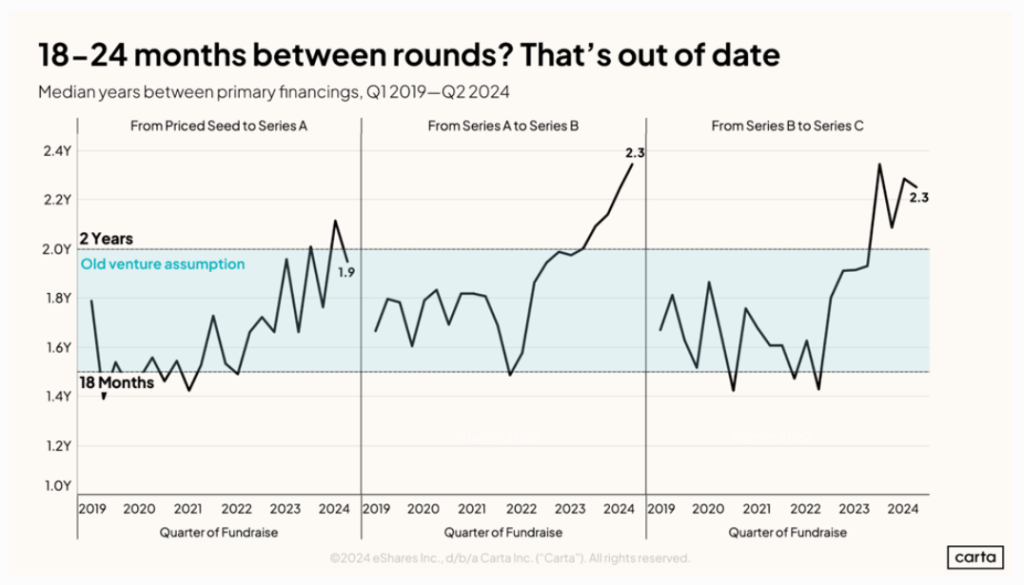
Companies that thrive in this extended fundraising environment are building cultures of resourcefulness and efficiency, where every team member understands the business fundamentals and contributes to strategic spending decisions. The most resilient organizations turn this constraint into a cultural strength, fostering innovation that doesn’t depend on abundant capital and creating teams that take pride in doing more with less.
4. Develop Scenario Planning as a Team Sport
Companies that emerge stronger from crises often had teams who regularly engaged in “what if” thinking, making them mentally prepared when the unthinkable happened. Scott Galloway says it best, “Scenario planning is not an attempt to predict the future, but to imagine several possible futures and determine a course of action that has the best outcomes across several futures.”
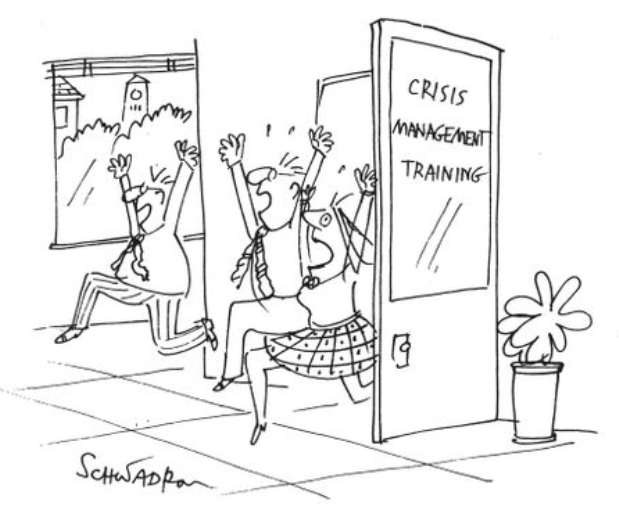
Culture Implementation: Quarterly “crisis simulations” where your team spends half a day responding to a hypothetical emergency—lost funding, security breach, market collapse—build the creative problem-solving skills needed when real crises emerge.
In today’s environment, you can run scenarios for:
- Operating with 30% less revenue than projected
- Managing with a hiring freeze for 12+ months
- Pivoting if your primary customer segment reduces spending
5. Cultivate a Network Before You Need It
The startups that survived the dot-com crash weren’t necessarily those with the best products, but often those with the strongest networks who could access emergency funding, strategic partnerships, or acquisition opportunities.
Culture Implementation: Make relationship-building part of your company culture, not just the founder’s job. Encourage team members to develop professional networks and represent the company in industry groups and communities. Create opportunities for your team, especially younger employees, to step away from screens and engage in meaningful face-to-face connections. In a digital-first world, the startups that cultivate genuine human relationships gain access to resources, partnerships, and opportunities that remain invisible to companies whose networking begins and ends with the founder’s Rolodex (this object is pretty old school, but still resonates with the point I’m making).
Turning Crisis Into Competitive Advantage

The most successful startups don’t just survive their “Black Monday” moments—they use them to pull ahead of competitors. Consider how Airbnb cut 25% of its workforce during COVID-19 while simultaneously reimagining its business model, positioning itself for its strongest performance ever when travel resumed.
The key distinction? Companies that merely survive crises see them as unfortunate events to be endured. Companies that thrive see crises as clarifying moments that reveal what truly matters and create opportunities for transformation.
As current indicators point toward economic contraction, now is the time to examine which expenses truly drive growth and which can be eliminated. Companies that can maintain growth with leaner operations will emerge from any downturn in a dominant position.
The Founder’s Mindset

As a founder, your response to crisis sets the tone for your entire organization. The most effective leaders during difficult periods share these traits:
- They acknowledge reality quickly rather than denying problems.
- They balance brutal honesty about challenges with authentic optimism about capabilities.
- They focus on what can be controlled rather than external factors.
- They find opportunities within constraints rather than just lamenting limitations.
- They prioritize team wellbeing, recognizing that burned-out teams make poor decisions.
Conclusion: Building an Antifragile Startup

The concept of “antifragility”—systems that get stronger when exposed to stressors—offers the perfect framework for startup culture-building. Just as the market has grown stronger through each crisis, the most successful startups don’t just survive their challenges; they use them as catalysts for innovation and growth.
During the 2020 pandemic crash, the S&P 500 lost 34% of its value in just 33 days—yet went on to reach new heights in the following years. Similarly, some of today’s most valuable companies including Slack, Uber, and Square were founded during or immediately after the 2008 financial crisis.
Your startup will face its “Black Monday.” The question isn’t whether it will happen, but whether you’ve built a culture that turns market crashes into launchpads.
Questions to consider
- What “Black Monday” moment has your startup already weathered, and how did your team culture either help you navigate it or reveal gaps you’ve since addressed?
- If your current runway suddenly needed to last twice as long, which cultural strengths would your organization rely on, and which new practices would you need to implement?
- How are you balancing transparency about economic challenges with maintaining team morale and confidence? Are there specific communication practices that have proven effective?

Article was written by John-Miguel Mitchell who is the Founder and Lead Consultant at Ekipo LLC. If you’d like to learn more about how to design and build out the ideal workplace culture for your business, email him at jmitchell@joinekipo.com.
Liked the blog? Get new content delivered directly to your inbox every Thursday & Friday.
 Ekipo
Ekipo 