

Imagine running on a treadmill at full speed.
It’s challenging, right? We’ve all seen those viral videos of people—and even pets—stumbling off before they can find their stride. While leaders and managers aren’t publicly facing such embarrassing moments, many feel like they’re sprinting on an ever-accelerating treadmill of workplace change and expectations.
“Change Management” has leapt from the pages of textbooks into the daily reality of leadership. It’s now a living, breathing challenge as leaders grapple with the rapid technological, demographic, and economic shifts shaping the future of their companies.
Let’s explore how these factors may reshape workplace culture in the years to come.
1. The Impact of Technology
a. Remote and Hybrid Work Models
One of the biggest disruptions to the workforce after the COVID-19 pandemic was the adoption of remote and hybrid work models, a trend that will continue in the years to come. Go on LinkedIn or any business news outlet and you still have leaders debating about what level of flexibility is best for their companies. Regardless, organizations will increasingly invest in digital tools like virtual reality (VR) and augmented reality (AR) to create immersive remote work experiences, bridging the gap between in-person and virtual interactions. The jury is still out on whether these tools will enhance collaboration and productivity, nevertheless, leaders still need to be aware of these resources.
b. Artificial Intelligence and Automation
Just as the steam engine revolutionized industry centuries ago, AI and automation are now poised to redefine the modern workplace. Leaders are anxiously hoping that this will allow employees to focus on more strategic and creative activities. However, this won’t happen if the leaders don’t foster a growth mindset and create a culture of continuous learning (a space where employees are encouraged to upskill and adapt to new technologies).
2. Changing Demographics
a. Multi-Generational Workforce
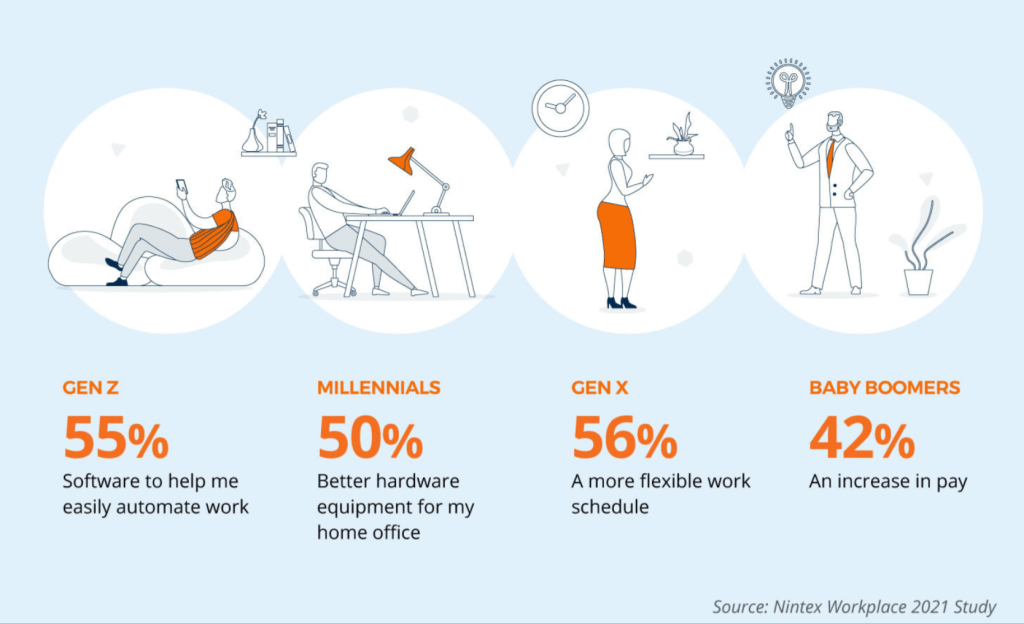
Picture this: a workplace where Baby Boomers, Gen X, Millennials, and Gen Z all bring their A-game to the table. That’s where we’re headed. The future workplace will consist of a diverse mix of generations, each bringing unique perspectives and preferences. Leaders must create inclusive cultures that value and leverage this level of diversity.
We’re talking flexible work arrangements that bend without breaking, benefits tailored to fit like a glove, wellness programs that have an emphasis on mental health and a mentoring program that’s more “choose your own adventure” than “follow the leader.” And let’s flip the script on that old mentoring model. Sure, the veterans have wisdom to share, but with people working longer than ever, those fresh-faced new hires might just have a thing or two (see above on technology) to teach the old guard.
3. Economic Shifts
a. Gig Economy and Freelance Work
Brace yourself for this: By 2027, a projected 86.5 million Americans—50.9% of the U.S. workforce—will be freelancing.
This staggering figure highlights the gig economy’s explosive growth. As more professionals embrace freelance and contract work, companies must evolve. The challenge? Integrating gig workers into company culture, making them feel valued and connected to the mission. Think inclusive communication channels and freelancer-friendly benefits. The future of work isn’t just changing—it’s here, and it’s wearing sweatpants.
b. Focus on Sustainability and Social Responsibility
In an era where every purchase is a statement, companies are realizing that green isn’t just a color—it’s a business strategy. Economic shifts and consumer expectations are driving companies to prioritize sustainability and social responsibility. Organizations that embed these values into their cultures will not only attract environmentally and socially conscious employees but also build stronger brand loyalty.
4. The Rise of Personalized Employee Experiences

a. Data-Driven Decision Making
While apps can streamline scheduling, they don’t address deeper workplace needs like manager-employee compatibility or personalized support, both of which are crucial for employee satisfaction and retention. However, advancements in data analytics are poised to bridge this gap by enabling organizations to create more personalized employee experiences.
By leveraging data, companies can gain insights into employee preferences, predict turnover, and tailor development programs to individual needs. This data-driven approach will foster a culture that meets the unique needs of each employee, ultimately enhancing engagement and retention.
b. Customizable Career Paths
To help employees gain more control over their career paths, startup leaders should focus on offering opportunities for lateral moves, upskilling, and personalized career development plans. By working with employees to create individualized career plans, leaders can ensure that their aspirations align with the company’s goals. Supporting career agility not only empowers employees to pursue their interests but also enhances their contributions to the organization
5. Embracing Diversity, Equity, and Inclusion (DEI) the right way
a. Beyond Tokenism
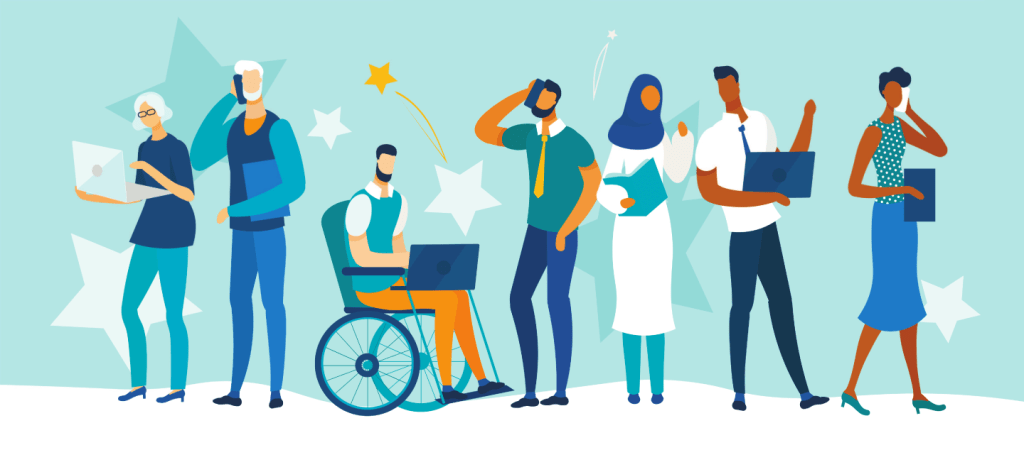
Future workplace cultures are gradually shifting from tokenistic DEI initiatives to genuine inclusivity. To achieve this, companies must prioritize internal mobility (providing employees from all backgrounds with equal opportunities for growth and advancement). Too often, this is the missing ingredient that companies forget to include in many of their DEI objectives. Full stop.
For example, it’s nice to celebrate Hispanic Heritage Month during the lunch hour, but if your team doesn’t promote and hire qualified Hispanics at the executive leadership level — how committed are they to internal mobility? This approach not only benefits individual employees (showing that you value their contribution), but also enhances the overall performance and reputation of the company, leading to sustainable and impactful business results.
b. Addressing Bias with Technology
In the pursuit of diverse and inclusive workplaces, AI and machine learning are becoming powerful tools for organizations. These technologies help companies identify and address biases in recruitment, evaluations, and promotions, while providing valuable insights into their practices. This enables the development of more targeted strategies for creating fair and inclusive workplaces and fosters trust among employees.
As these technologies evolve, they hold the promise of further advancements in creating diverse, equitable, and inclusive workplaces for all. Expect to see these issues and tools to merge in the next the couple of years.
Adapting Leadership for the Future Workplace
Leaders must ask themselves one question: will you embrace these changes and be proactive about these challenges that are impacting your culture in the months ahead (not years) or will you shove your head in the sand and hope that the systems, processes and practices of yesterday will come to your rescue?
Just as we struggle to find our balance on a fast-moving treadmill, leaders must navigate the accelerating pace of workplace changes brought on by technological advancements, demographic shifts, and evolving economic landscapes. However, unlike a treadmill that allows you to simply step off, the demands of leadership require continuous adaptation, innovation, and resilience.
Questions to consider:

- How are you preparing your organization to thrive in the rapidly evolving future of work?
- What challenges do you foresee in adapting to the shifting dynamics of the workforce, and how are you planning to address them?
- Finally, in what ways are you rethinking leadership and culture to better align with the expectations of tomorrow’s workforce?
Article was written by John-Miguel Mitchell who is the Founder and Lead Consultant at Ekipo LLC. If you’d like to learn more about how to design and build out the ideal workplace culture for your business, email him at jmitchell@joinekipo.com.
 Ekipo
Ekipo 