

The Business Seascape: An Analogy
As my kids can attest, I’m a big fan of analogies, and I seem to constantly draw comparisons between the world of business and the world at large.
Over the past 15 years, I’ve had the pleasure (and sometimes the not-so-pleasant experience) of working with companies of all shapes and sizes. It’s been like a whirlwind tour of the business world – I’ve witnessed their potential, tackled their challenges, and tested their limits. Yes, the previous sentence is a nice way of saying that I’ve seen the good, the bad, and the ugly across various types of businesses.
In today’s economy, businesses come in three distinct sizes:
Large companies are like majestic cruise ships navigating the vast seas of commerce. These corporate behemoths are like floating cities, their reputations towering like grand superstructures for all to admire. Just as a cruise ship’s impressive presence cannot be ignored, these large companies command attention in the business world with their established brand names, extensive resources, and global reach.
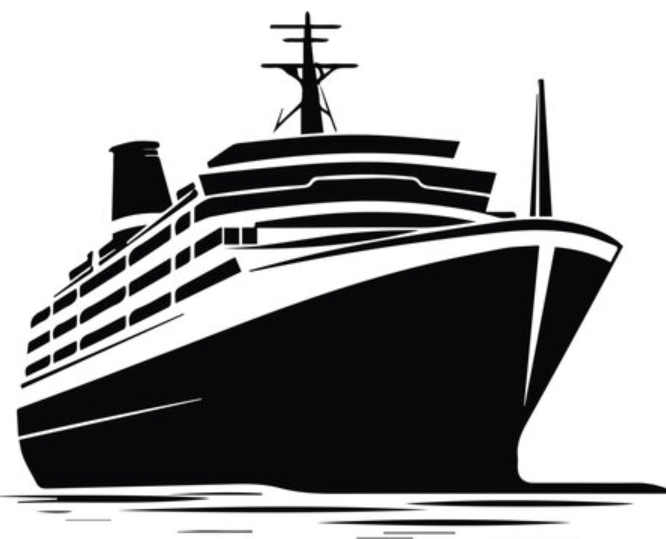
Think Walmart, Toyota, Microsoft, JPMorgan Chase and Apple to name a few.
Midsize companies, on the other hand, are akin to nimble sailboats. They may not boast the same magnitude as cruise ships, but their sails catch the winds of opportunity with agility and precision. These midsize enterprises have the flexibility to pivot swiftly, harnessing market currents to their advantage while maintaining a balance between growth and adaptability.

Think Squarespace, Etsy, Blue Apron, Slack and Eventbrite to name a few.
Last but certainly not least, you have startups. These innovators of the business world resemble high-speed jet skis, exuding a disruptive spirit and embracing uncertainty as they accelerate into uncharted waters. Despite lacking the sheer scale of cruise ships or the stability of sailboats, their daring maneuvers and rapid acceleration propel them into the forefront of emerging industries.

Think ___(your startup)____ and where that might fit within this comparison.
Culture as a Compass in Uncharted Waters
The analogy highlights the unique challenges and opportunities that startups face in the business landscape. Unlike established corporations with deep-rooted cultures, startups have the chance to shape their workplace culture from the ground up.
A well-designed culture can serve as a powerful compass, guiding startups through uncharted waters and helping them navigate the turbulent seas of innovation. In the early stages, startups are like jet skis, agile and nimble, but they can quickly lose their way without a clear cultural direction.

A strong workplace culture acts as a unifying force, aligning the team’s values, beliefs, and behaviors towards a common goal. It fosters a sense of purpose and belonging, empowering employees to embrace the startup’s mission wholeheartedly.
For startups, investing in a strong, positive culture not only enhances employee satisfaction and retention but can also lead to superior financial performance and market success. The graph below illustrates the financial advantage of investing in companies recognized as the “Best Places to Work” (BPTW). This remarkable difference underscores the tangible benefits of a positive workplace culture.
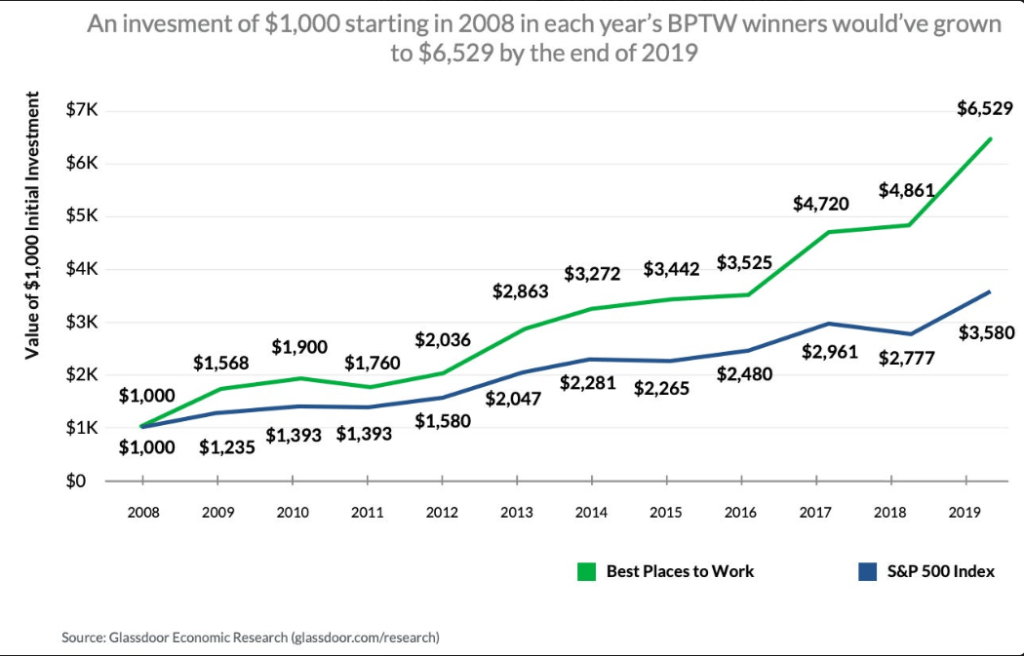
This serves as compelling evidence that prioritizing workplace culture is a crucial strategy for long-term growth and sustainability.
Moreover, a positive workplace culture can be a startup’s competitive advantage in attracting and retaining top talent. In an era where skilled professionals have numerous options, a compelling culture that prioritizes growth, collaboration, and innovation can be a powerful draw. Startups with a well-defined culture are better positioned to attract like-minded individuals who resonate with their values and vision.
Charting a Course for Success
In the dynamic world of startups, where innovation and disruption are the norm, workplace culture serves as both an anchor and a sail. It grounds your organization in shared values while propelling it forward towards your vision. As we’ve explored, startups that prioritize building a strong, positive culture are better equipped to navigate the choppy waters of the business world. They’re more likely to attract top talent, achieve superior financial performance, and maintain their agility even as they grow.
Remember, culture isn’t something that just happens – it needs to be intentionally designed and built out. So, as you rev up your startup’s engines and prepare to speed across the waves of opportunity, don’t forget to chart your cultural course. It might just be the difference between riding the crest of success and wiping out in the surf of challenges. As a startup founder, are you ready to make workplace culture your startup’s secret weapon?
More questions to consider:

- How does culture drive performance in your startup, and what is it worth to your organization?
- How do you address cultural challenges or misalignments when they arise?
- Finally, how do you envision your workplace culture evolving as your startup transitions from a “jet ski” to a “sailboat” or even a “cruise ship”?
Article was written by John-Miguel Mitchell who is the Founder and Lead Consultant at Ekipo LLC. If you’d like to learn more about how to design and build out the ideal workplace culture for your business, email him at jmitchell@joinekipo.com.
 Ekipo
Ekipo 
Leave a comment